
Why Choose a 6 Piece HDPE Dining Set With Bench?
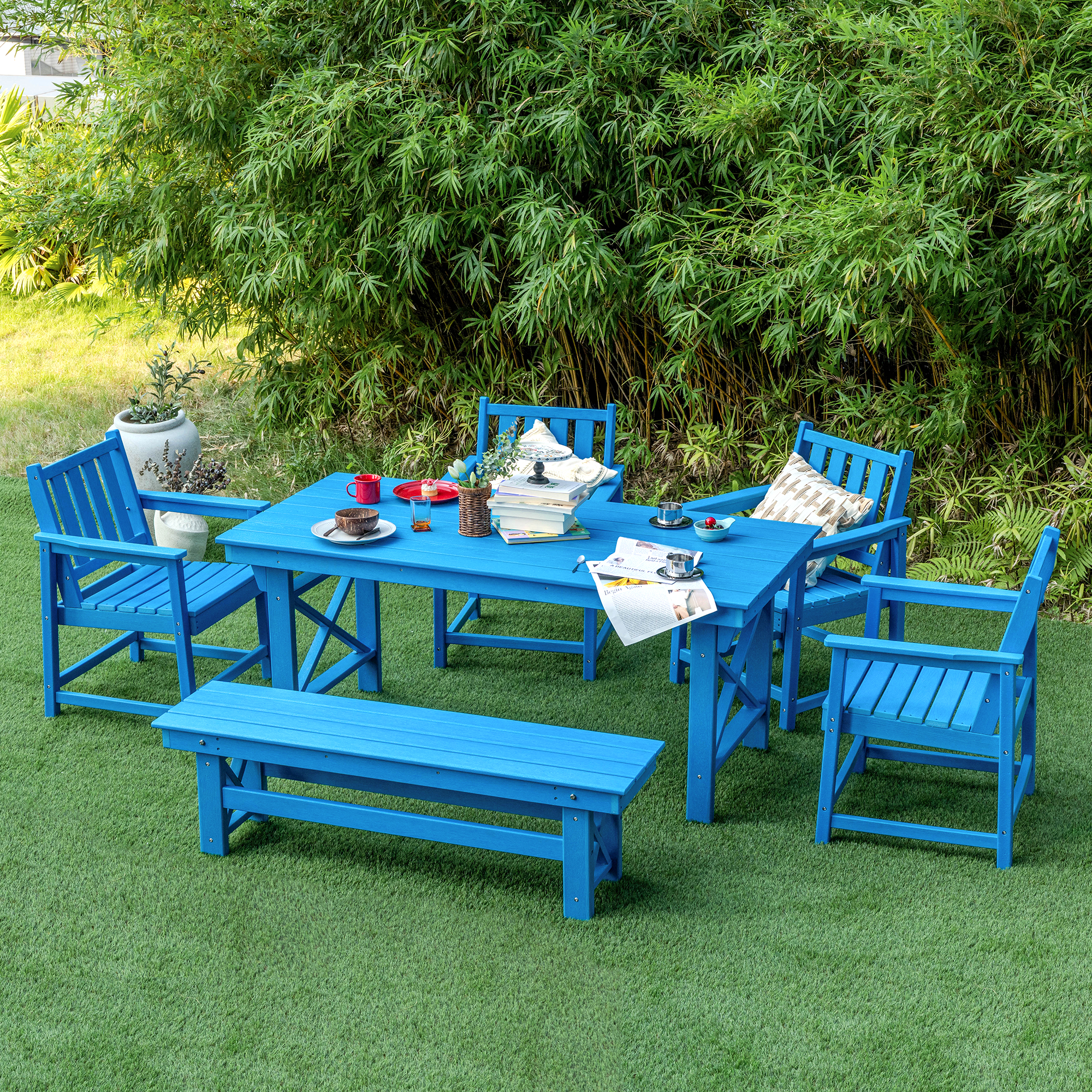
A 6 piece HDPE dining set with bench creates a practical outdoor dining area for families and guests. Its combination of four individual chairs, one shared bench, and a dining table supports flexible seating arrangements. Unlike conventional chair-only configurations, the bench allows family members to sit together while maintaining convenient access to the table. High-density polyethylene (HDPE) offers strong moisture resistance and requires relatively little maintenance. Additionally, the furniture's slatted surfaces allow rainwater to drain instead of collecting across seating areas. Reinforced table legs improve structural stability during everyday meals and social gatherings. The arrangement works particularly well on backyard patios, decks, and garden terraces. Families can use the furniture for breakfast, weekend barbecues, or evening celebrations. Its adaptable layout combines everyday convenience with durable materials suitable for regular outdoor use.
Backyard Family Dinners and Everyday Meals
Backyard dining areas benefit from furniture that supports comfortable seating and frequent family meals. A rectangular table provides a central surface for serving dishes, beverages, and shared food platters. Four individual chairs offer personal seating space, while the bench accommodates additional family members. Parents can position the bench along one side for convenient access during meals with children. However, younger children should always use seating appropriate for their age and size. The 6 piece HDPE dining set with bench also supports relaxed breakfasts and casual evening dinners. Its smooth surfaces simplify cleaning after food spills or outdoor activities. Unlike untreated wooden furniture, HDPE does not require periodic sealing or refinishing. Families should position the table on level ground to maintain stability. Adequate clearance around each seat improves accessibility and everyday comfort.
Patio Barbecues and Weekend Gatherings
Outdoor barbecues require dining furniture that accommodates different seating preferences and frequent movement. A six-piece configuration offers individual chairs for guests who prefer dedicated seating positions. Meanwhile, the shared bench creates a convenient option for informal group conversations. Hosts can arrange the chairs around the table while leaving accessible pathways toward serving areas. A 6 piece HDPE dining set with bench works particularly well for weekend gatherings involving several family members. Its slatted tabletop supports drainage after cleaning or unexpected rainfall. Furthermore, HDPE resists moisture penetration, reducing concerns about swelling common with some wooden materials. Positioning the dining area away from grills minimizes exposure to excessive heat and accidental splashes. Guests also need sufficient space behind chairs for comfortable movement. Thoughtful placement makes outdoor entertaining more organized without requiring additional dining furniture.
Deck Dining and Compact Outdoor Spaces
Decks often have limited usable space, making furniture arrangement particularly important. A dining bench can occupy one side of the table without requiring multiple individual chair positions. This configuration may simplify circulation when homeowners position the bench near a boundary. However, users must maintain enough clearance to sit down and stand comfortably. The table's reinforced X-leg structure provides stability when the furniture rests on a firm, level surface. Deck boards should remain structurally sound and capable of supporting the complete occupied furniture arrangement. Homeowners should also consider the combined weight of furniture, guests, and serving items. Rubber-compatible furniture glides can help protect certain deck surfaces when appropriate. Before installation, measure the complete layout, including chair movement and walking pathways. This preparation helps create a comfortable dining area without restricting doors, stairs, or access routes.
Poolside Meals and Relaxed Outdoor Seating
Poolside dining furniture faces frequent exposure to moisture, humidity, and occasional splashes. HDPE offers low water absorption, making it suitable for these demanding outdoor conditions. Unlike natural wood, the material does not swell significantly when exposed to ordinary rainwater. Slatted seats and tabletops also encourage faster drainage after swimming activities. However, standing water may remain around joints, hardware, or uneven surfaces. Homeowners should maintain a safe distance between dining furniture and swimming pool edges. Wet paving requires particular attention because slippery surfaces increase the risk of falls. The bench provides convenient seating for informal snacks or family conversations after swimming. Regular rinsing helps remove sunscreen residue, pool chemicals, and surface dirt. Although 304 stainless steel offers corrosion resistance, repeated chemical exposure still requires maintenance. Proper positioning protects the furniture while improving poolside comfort and safety.
Garden Dining Areas and Open-Air Entertaining
Garden dining spaces combine natural surroundings with the practical requirements of outdoor furniture. A 6 piece HDPE dining set with bench can create a dedicated gathering area among lawns, flowerbeds, or landscaped terraces. Homeowners should choose stable paving rather than placing heavy furniture directly on soft soil. Uneven ground may affect chair balance and increase stress on structural connections. The bench encourages shared seating during afternoon refreshments, garden parties, and family celebrations. Meanwhile, individual chairs allow guests to adjust their positions around the dining table. Color selection can complement surrounding plants, stone pathways, and exterior finishes. Outdoor lighting also improves visibility during evening meals without changing the furniture arrangement. Adequate space between the dining area and planted borders helps prevent obstruction. With appropriate placement, the furniture supports enjoyable meals while preserving accessible garden pathways.
How a 6 Piece HDPE Dining Set With Bench Handles Weather
Outdoor furniture must tolerate moisture, sunlight, and changing seasonal temperatures without excessive maintenance. HDPE has a low moisture absorption rate because its polymer structure resists water penetration. This characteristic helps prevent swelling, moisture-related decay, and structural deterioration associated with some natural materials. However, long-term UV performance depends on the quality of pigments, stabilizers, and manufacturing processes. The SeeHill model combines HDPE construction with 304 stainless steel hardware for improved outdoor durability. This stainless steel grade typically contains chromium and nickel, supporting corrosion resistance under ordinary atmospheric conditions. Nevertheless, coastal salt exposure and concentrated chlorine can still affect metal surfaces. Slatted furniture components also allow rainwater to escape through open drainage gaps. Regular inspections remain important because temperature changes can influence joint tightness. These material characteristics make the furniture suitable for various outdoor environments when maintained correctly.
Sun Protection and Umbrella Placement
Comfortable outdoor dining requires effective shade during periods of strong sunlight. The dining table includes an integrated umbrella opening for compatible outdoor shade arrangements. A centrally positioned umbrella can reduce direct sunlight across the tabletop and surrounding seating areas. However, homeowners must verify pole diameter, umbrella clearance, and base compatibility before installation. The tabletop opening alone cannot provide sufficient support for an umbrella during windy conditions. A separate weighted base helps stabilize the umbrella according to its manufacturer's specifications. Larger umbrellas may require additional support because their canopies create greater wind resistance. Positioning the dining area near existing shade structures provides another practical option. During severe weather, homeowners should close or remove umbrellas to reduce potential damage. Proper shade management improves comfort while protecting guests from prolonged direct sunlight during outdoor meals.
Seating Comfort, Weight Capacity, and Stability
Reliable outdoor dining furniture must provide stable support under normal everyday use. The SeeHill DS076-2 model features reinforced X-shaped table legs and dual crossbars for improved structural rigidity. Its manufacturer specifies a maximum table load of 220 pounds under its stated product conditions. Each dining chair supports up to 300 pounds, while the bench supports up to 600 pounds. These ratings represent separate furniture components rather than one combined seating capacity. Users should distribute weight evenly and avoid concentrating heavy loads near unsupported edges. Additionally, the furniture must rest on level ground to maintain balanced contact with the surface. Proper assembly matters because loose fasteners can reduce stability during repeated use. Regular inspection helps identify movement, damaged components, or hardware requiring adjustment. Following the manufacturer's load limits promotes safer dining and preserves structural reliability.

Which Outdoor Setting Fits This Dining Set Best?
Different outdoor environments require specific furniture arrangements and maintenance considerations. Backyard patios generally provide the greatest flexibility for family meals and entertaining. Deck installations require careful measurements because walkways, railings, and doors may limit available space. Poolside locations benefit from moisture-resistant materials but demand additional attention to slippery surfaces. Garden dining areas offer attractive surroundings, although stable paving remains essential for safe furniture positioning. Covered terraces provide partial weather protection and may support more frequent seasonal use. Before selecting a location, measure the table footprint and allow room for occupied chairs. Consider sunlight direction, wind exposure, drainage, and nearby activity areas. Homeowners should also evaluate how guests enter and leave the dining space. The following comparison highlights suitable applications and important placement factors for common outdoor settings.
Outdoor Dining Location Comparison
| Outdoor Setting | Recommended Use | Main Advantage | Placement Consideration |
|---|---|---|---|
| Backyard Patio | Family meals | Flexible seating | Maintain walking clearance |
| Deck | Compact dining | Convenient bench arrangement | Check surface stability |
| Poolside | Casual refreshments | Moisture resistance | Avoid slippery areas |
| Garden | Outdoor gatherings | Natural surroundings | Use level paving |
| Covered Terrace | Regular dining | Partial weather protection | Allow ventilation and access |
Matching Furniture Placement With Outdoor Activities
Choosing the best location involves more than simply finding enough space for a dining table. Homeowners should consider how people move between seating areas, food preparation spaces, and nearby entrances. A 6 piece HDPE dining set with bench works particularly well where guests can approach the table from multiple directions. For example, backyard patios often provide direct access to kitchens and outdoor cooking equipment. Conversely, narrow decks may require careful bench positioning to preserve circulation. Poolside arrangements should prioritize dry walking surfaces and appropriate separation from swimming areas. Garden installations benefit from stable paving that prevents unwanted furniture movement. A covered terrace may offer greater comfort during light rain or intense sunshine. Regardless of location, seating comfort depends on unobstructed access and adequate legroom. Evaluating these factors creates a more practical outdoor dining environment.
Practical Maintenance for Long-Term Outdoor Use
Outdoor dining furniture requires routine care to maintain cleanliness, appearance, and structural reliability. HDPE surfaces generally need less maintenance than untreated wood because they do not require painting or sealing. Nevertheless, environmental residue can gradually accumulate across tabletops, seating surfaces, and connecting joints. Regular cleaning also helps prevent dirt from collecting between drainage slats. Homeowners should inspect stainless steel fasteners periodically, especially after prolonged exposure to rain or coastal humidity. Appropriate care becomes particularly important following outdoor parties, poolside activities, and seasonal weather changes. Simple maintenance practices can preserve the furniture's appearance while reducing unnecessary wear. The following checklist addresses the most common cleaning and inspection tasks. Always follow the manufacturer's specific care instructions when selecting cleaning agents or adjusting hardware. Avoid abrasive products that could damage surface finishes.
Outdoor Furniture Maintenance Checklist
-
Clean HDPE surfaces using mild soap, warm water, and a soft cloth.
-
Rinse tabletop and seating slats to remove trapped dirt.
-
Inspect bolts, fasteners, and structural joints periodically.
-
Remove sunscreen residue, food stains, and chemical splashes promptly.
-
Avoid abrasive brushes, aggressive solvents, and direct exposure to excessive heat.
-
Check ground stability after heavy rain or seasonal movement.
-
Secure or remove umbrellas during strong winds.
Maintaining Appearance and Structural Performance
Consistent maintenance helps outdoor furniture retain its appearance during extended exposure to environmental conditions. Mild soap and water usually remove ordinary food stains, pollen, and surface dust from HDPE. A soft brush can reach narrow drainage gaps without unnecessarily scratching the material. After cleaning, rinse the surfaces thoroughly and allow remaining moisture to drain naturally. Stainless steel hardware also benefits from periodic rinsing, particularly in coastal environments. Homeowners should inspect connections for looseness and tighten fasteners according to the manufacturer's assembly instructions. Damaged parts require appropriate replacement rather than temporary repairs that could compromise stability. During storms, secure loose accessories and protect the furniture from falling branches or flying debris. Seasonal inspections can identify small issues before they affect everyday comfort. These straightforward practices support reliable outdoor dining throughout changing weather conditions.
Frequently Asked Questions
How Many People Can Sit at a Six-Piece Dining Set?
A six-piece dining arrangement includes one table, four individual chairs, and one shared bench. Therefore, the number of furniture pieces differs from the number of available seating positions. Four guests can occupy the individual chairs, while the bench provides additional seating. Depending on body size and comfort requirements, the bench may accommodate two adults. This creates a practical arrangement for approximately six people. However, the manufacturer's weight limits remain essential when determining suitable occupancy. The SeeHill model specifies a maximum bench capacity of 600 pounds. Families should also consider personal space, seating preferences, and comfortable access around the table. Avoid overcrowding the bench or exceeding the stated load capacity.
Can HDPE Outdoor Dining Furniture Stay Outside Year-Round?
HDPE outdoor furniture generally tolerates year-round exposure better than many untreated natural materials. Its low moisture absorption helps resist swelling, while suitable UV stabilizers reduce sunlight-related deterioration. However, actual performance depends on material formulation, manufacturing quality, and environmental conditions. Extreme temperatures, prolonged ultraviolet exposure, and chemical contact may still influence appearance over time. Stainless steel hardware also requires occasional inspection and cleaning, especially near coastal environments. Homeowners should remove loose accessories before severe storms and avoid placing furniture near intense heat sources. Protective covers can reduce dirt accumulation during extended periods without use. Regular cleaning and structural inspections help maintain reliable performance throughout different seasons and outdoor conditions.
Is a Bench Better Than Individual Chairs for Outdoor Dining?
A bench offers several practical advantages, particularly for families and informal outdoor gatherings. Its continuous seating surface allows people to share space without separate chair frames between them. This arrangement can simplify seating for children and support flexible group configurations. However, individual chairs provide dedicated personal space and easier independent movement. Guests with limited mobility may also prefer chairs with armrests and stable back support. The ideal arrangement depends on household needs, dining frequency, and available outdoor space. Combining four chairs with one bench provides both seating options within the same furniture set. This balance makes the configuration useful for everyday meals, casual entertaining, and outdoor family celebrations.