
Why Choose a 7 Piece HDPE Patio Dining Set With Umbrella Hole?
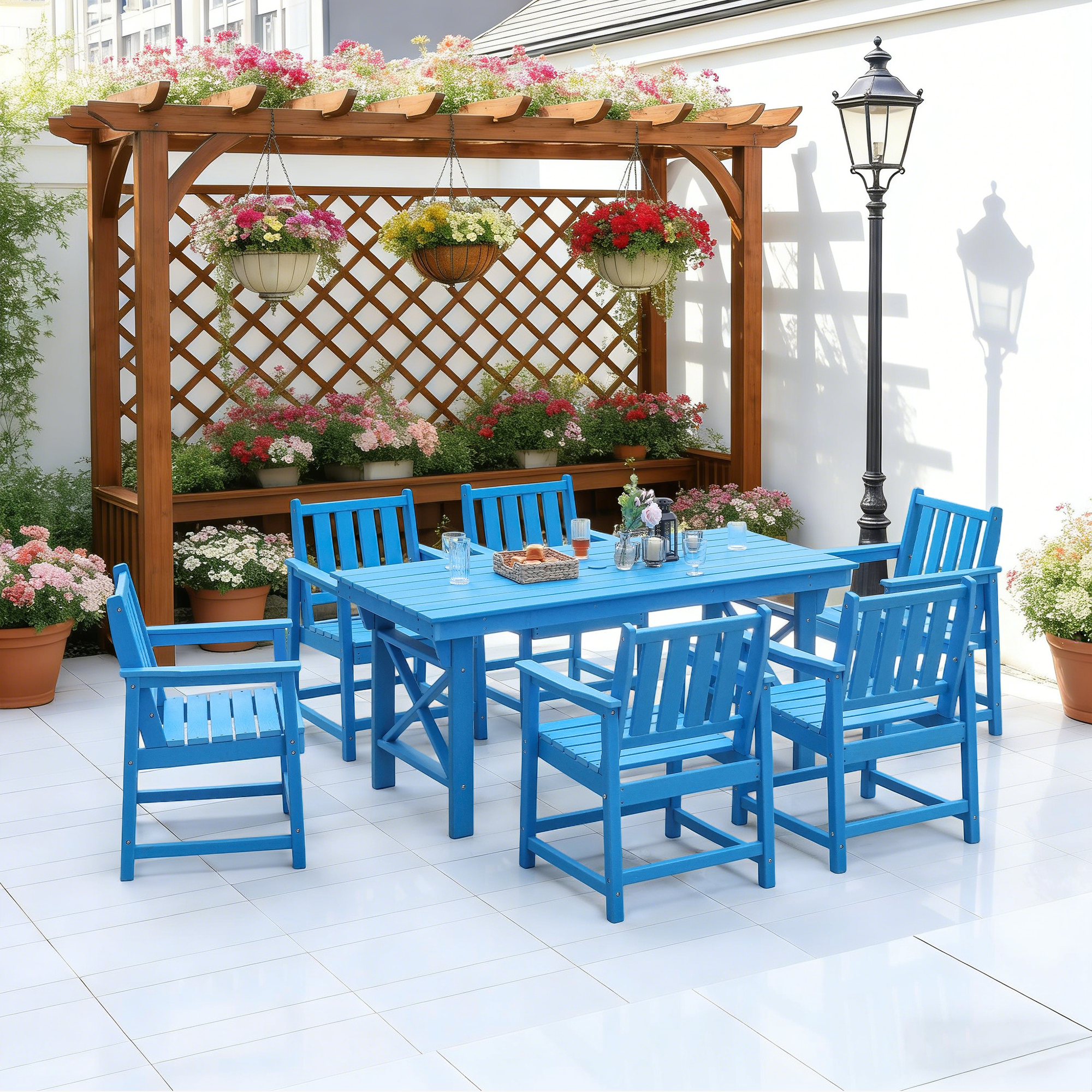
A 7 piece HDPE patio dining set with umbrella hole offers practical seating for six people while providing convenient outdoor shade options. Its configuration typically includes one dining table and six matching chairs, creating a coordinated outdoor dining area. High-density polyethylene construction provides resistance to moisture, sunlight, and common outdoor environmental conditions. Unlike natural wood, HDPE does not require regular staining or sealing to maintain its appearance. The integrated umbrella opening also allows users to position shade directly above the dining table. This feature improves comfort during sunny afternoons and outdoor gatherings. Additionally, coordinated furniture dimensions help maintain consistent seating arrangements around the table. Buyers should evaluate available patio space, material quality, structural strength, and umbrella compatibility before selecting a set. These considerations influence comfort, durability, and long-term ownership value.
How Does HDPE Material Perform Outdoors?
High-density polyethylene is a thermoplastic polymer with a dense molecular structure and relatively low moisture absorption. These characteristics make it suitable for outdoor furniture exposed to changing weather conditions. Quality HDPE furniture often incorporates UV stabilizers and color pigments to reduce sunlight-related deterioration. However, color retention depends on additive quality, pigment stability, and prolonged exposure intensity. HDPE also resists many household chemicals and does not suffer biological decay like untreated natural wood. Its flexibility helps withstand moderate impacts without the brittle behavior associated with some rigid plastics. Temperature changes can cause expansion and contraction, making proper fastening and structural clearances important. Buyers should examine board thickness, surface consistency, and manufacturer material specifications. These details provide stronger indicators of durability than broad weatherproof claims alone. Material formulation ultimately determines outdoor performance.
What Table Size Works Best for Six People?
A six-person dining table should provide sufficient space for meals without restricting movement around surrounding chairs. Rectangular configurations typically position three chairs along each long side, depending on table dimensions and leg placement. Each diner generally benefits from approximately 24 inches of table-edge space for comfortable everyday seating. Larger place settings and shared serving dishes may require additional room. Buyers should measure the complete table footprint rather than estimating space from seating capacity alone. Chair depth, armrest width, and leg clearance also influence practical usability. Allowing approximately 36 inches beyond the table perimeter supports chair movement and comfortable circulation. Narrow patios may require additional planning around doors, railings, and nearby furniture. Before purchasing, compare the manufacturer's actual table and chair dimensions with the available area. Proper spacing improves dining comfort and accessibility.
How Important Is Umbrella Hole Compatibility?
An integrated umbrella opening makes outdoor dining more comfortable by supporting shade directly above the seating area. The 7 piece HDPE patio dining set with umbrella hole features a 2.2-inch opening, according to its product specifications. However, the opening diameter alone does not guarantee compatibility with every patio umbrella. Buyers should compare the umbrella pole diameter with the opening and any supplied reducing ring. A separate weighted umbrella base is usually necessary to provide adequate stability. Wind exposure, canopy diameter, and umbrella height also influence safe operation. Larger canopies create greater wind loads and may require heavier bases. Table thickness and the distance between the opening and lower support structures also affect pole clearance. Selecting compatible components helps reduce unnecessary movement and improves practical shade coverage during outdoor meals.

What Makes the Table Frame Stable and Durable?
Table stability depends on structural geometry, connection strength, and effective load distribution across supporting components. Reinforced X-shaped legs create a broad supporting arrangement that helps resist lateral movement. Dual crossbars can further improve rigidity by connecting structural members and reducing unwanted frame movement. These features matter when users place serving dishes, beverages, and dining accessories across the tabletop. Fastener quality also influences long-term structural reliability. The featured dining set uses 304 stainless steel hardware, which offers good corrosion resistance under common outdoor conditions. Nevertheless, stainless steel can still develop corrosion under aggressive chloride exposure or poor maintenance. Buyers should inspect connection points, fastener alignment, and overall frame rigidity after assembly. Uneven patio surfaces may also affect stability, regardless of construction quality. A well-supported frame provides greater confidence during everyday dining activities.
Are the Dining Chairs Comfortable for Long Meals?
Comfortable outdoor dining chairs combine appropriate seat dimensions, backrest support, armrest positioning, and stable structural construction. A contoured seat helps distribute body weight while reducing concentrated pressure during extended sitting periods. High backrests can support the upper body and encourage a more comfortable seated position. Armrests provide additional support when users sit down or stand up. Slatted seating surfaces promote drainage and reduce standing water after rainfall. However, excessive gaps or poorly shaped edges may affect comfort during longer meals. The featured product specifies a maximum weight capacity of 300 pounds per chair. Buyers should also check seat height against the dining table's underside clearance. Adequate legroom prevents uncomfortable contact with supporting structures. Testing seat depth, armrest height, and backrest angle helps determine whether the furniture suits different users.
How Does the Set Handle Rain, Sun, and Humidity?
Outdoor dining furniture must tolerate repeated environmental exposure without requiring extensive maintenance or frequent replacement. A 7 piece HDPE patio dining set with umbrella hole provides advantages through moisture-resistant polymer construction and corrosion-resistant hardware. HDPE absorbs relatively little water, reducing the swelling and deterioration associated with some natural materials. Slatted surfaces allow rainwater to drain instead of collecting across large horizontal areas. UV stabilizers can reduce sunlight-related degradation, although prolonged exposure may still affect color and surface properties. In humid environments, stainless steel fasteners help limit corrosion around structural connections. Coastal locations require particular attention because airborne salt increases corrosion risks. Seasonal temperature fluctuations may also influence dimensional expansion and contraction. Regular inspections, appropriate cleaning, and protective storage during severe weather help preserve structural reliability and appearance.
What Should Buyers Check Before Assembly?
Proper preparation reduces installation difficulties and helps identify missing components before furniture assembly begins. Buyers should review the manufacturer's instructions, component inventory, and required tools before unpacking every item. A clean, level assembly surface helps prevent scratches and supports accurate alignment. Most modular outdoor furniture relies on correctly positioned bolts, brackets, and connecting members for structural stability. Tightening fasteners unevenly can create alignment problems or unnecessary stress around connection points. Users should initially position all components and loosely install the hardware before completing final tightening. Protective gloves and suitable tools can improve handling during assembly. After installation, inspect chair stability, tabletop levelness, and umbrella opening clearance. These checks help identify potential problems before regular use. The following checklist summarizes important preparation and purchasing considerations.
-
Confirm the table and chair dimensions match the available patio space.
-
Check that all furniture components and hardware are included.
-
Verify the umbrella pole diameter and required base specifications.
-
Inspect HDPE boards for visible damage or inconsistent finishing.
-
Confirm assembly tools and instructions are available.
-
Check structural connections and chair stability after installation.
How Do You Evaluate Material and Construction Quality?
A detailed construction assessment helps buyers distinguish durable outdoor furniture from products relying mainly on visual appeal. Material consistency, hardware selection, and connection design directly influence long-term reliability. HDPE boards should display uniform surfaces without visible cracking, severe warping, or poorly finished edges. Structural connections should maintain proper alignment without creating excessive stress around fastening points. Stainless steel hardware offers useful corrosion resistance, particularly when manufacturers select appropriate grades for outdoor conditions. Slatted tabletops should provide consistent drainage gaps while maintaining sufficient support for everyday dining accessories. Chairs also require stable frames, properly supported seats, and secure armrest connections. Buyers should compare these characteristics alongside published load capacities and product dimensions. The following table identifies important quality indicators and their practical significance for outdoor furniture selection.
| Component | Quality Indicator | Buying Consideration |
|---|---|---|
| HDPE Boards | Uniform thickness and finish | Resistance to deformation and wear |
| Table Frame | Reinforced X-shaped supports | Structural rigidity and stability |
| Hardware | 304 stainless steel fasteners | Corrosion resistance |
| Tabletop | Consistent drainage gaps | Water removal and cleaning |
| Dining Chairs | Secure seat and backrest joints | Comfort and load support |
| Umbrella Opening | Compatible pole clearance | Shade installation and stability |
How Much Maintenance Does HDPE Furniture Need?
HDPE outdoor furniture generally requires less routine maintenance than untreated wooden furniture because its surface resists moisture absorption. A 7 piece HDPE patio dining set with umbrella hole benefits from regular cleaning to remove food residue, dust, and environmental deposits. Mild dish soap, warm water, and a soft cloth usually handle everyday cleaning requirements. For stubborn stains, a soft-bristle brush can help remove residue without damaging the finish. Avoid abrasive cleaning pads and aggressive solvents that may scratch or discolor the surface. Inspect bolts and structural connections periodically, especially after frequent movement or seasonal temperature changes. Although HDPE does not require painting or sealing, routine care helps preserve its appearance. During severe storms, secure or remove umbrellas to prevent excessive wind loading. Appropriate maintenance supports reliable long-term outdoor use.
Is a 7 Piece HDPE Patio Dining Set With Umbrella Hole Worth It?
Evaluating outdoor dining furniture requires balancing purchase cost, material durability, seating comfort, and expected maintenance requirements. A seven-piece configuration offers a practical arrangement for families and households that regularly entertain guests. HDPE construction reduces the need for refinishing while providing useful resistance to moisture and environmental exposure. Reinforced table supports and corrosion-resistant fasteners also contribute to structural reliability. The umbrella opening adds flexibility by allowing users to position shade above the dining area. However, overall value depends on actual dimensions, manufacturing quality, warranty coverage, and intended usage conditions. Buyers should consider whether six matching chairs meet their everyday seating requirements. Smaller households may prefer compact arrangements, while frequent hosts may appreciate the additional capacity. A suitable purchase balances comfort, available space, long-term durability, and maintenance expectations.
What Should You Confirm Before Making a Purchase?
Before purchasing outdoor dining furniture, verify that the complete configuration matches your space, comfort requirements, and expected usage. Start by checking the manufacturer's published dimensions for both the table and individual chairs. Confirm that enough clearance remains for walking, opening doors, and moving chairs comfortably. Next, review HDPE material specifications, structural reinforcements, and the grade of included hardware. Umbrella compatibility deserves separate attention because opening diameter does not establish full shade-system stability. Buyers should also examine assembly instructions, shipping arrangements, warranty coverage, and replacement-part availability. Compare total ownership requirements rather than focusing exclusively on initial pricing. Finally, consider the furniture's appearance alongside surrounding patio materials and landscaping. These checks reduce purchasing uncertainty and support a more functional outdoor dining arrangement. Careful selection helps create a comfortable, durable outdoor dining space.
Frequently Asked Questions
Can a 2.2-Inch Umbrella Hole Fit Different Patio Umbrellas?
A 2.2-inch umbrella opening can accommodate various patio umbrellas, provided their pole diameters fit within the available clearance. However, compatibility depends on more than the tabletop opening. Buyers should also examine pole length, base dimensions, and clearance beneath the table. Smaller poles may require a reducing ring to limit unnecessary movement. A suitable weighted base is essential because the dining table should not provide the umbrella's only support. Canopy diameter and wind exposure also affect stability requirements. Always follow the umbrella manufacturer's recommended base specifications. Close or remove the umbrella during strong winds to reduce damage and injury risks.
Can HDPE Patio Dining Furniture Stay Outside Year-Round?
Quality HDPE furniture generally tolerates outdoor exposure throughout different seasons because the material resists moisture absorption and biological decay. UV stabilizers can also reduce degradation associated with sunlight exposure. However, environmental resistance does not eliminate every potential maintenance concern. Extreme temperatures may cause dimensional changes, while prolonged sunlight can gradually affect surface appearance. Coastal conditions can accelerate corrosion around metal hardware despite stainless steel construction. Regular cleaning and occasional fastener inspections help maintain structural reliability. During severe storms, secure lightweight accessories and remove patio umbrellas. Protective covers or sheltered storage can also reduce unnecessary exposure and simplify seasonal maintenance.
How Much Space Should You Allow Around a Six-Chair Dining Set?
A six-chair dining arrangement requires sufficient clearance for seating, movement, and access to nearby outdoor features. As a practical starting point, allow approximately 36 inches beyond the table edges for chair movement and circulation. Areas with frequent foot traffic may benefit from additional space. Buyers should also consider the outward movement of chairs when people stand up. Armrests and wider chair frames can increase the total occupied footprint. Measure nearby railings, exterior doors, planters, and other furniture before finalizing the layout. Comparing these measurements with manufacturer specifications helps prevent overcrowding. A balanced arrangement improves comfort and everyday outdoor dining convenience.