
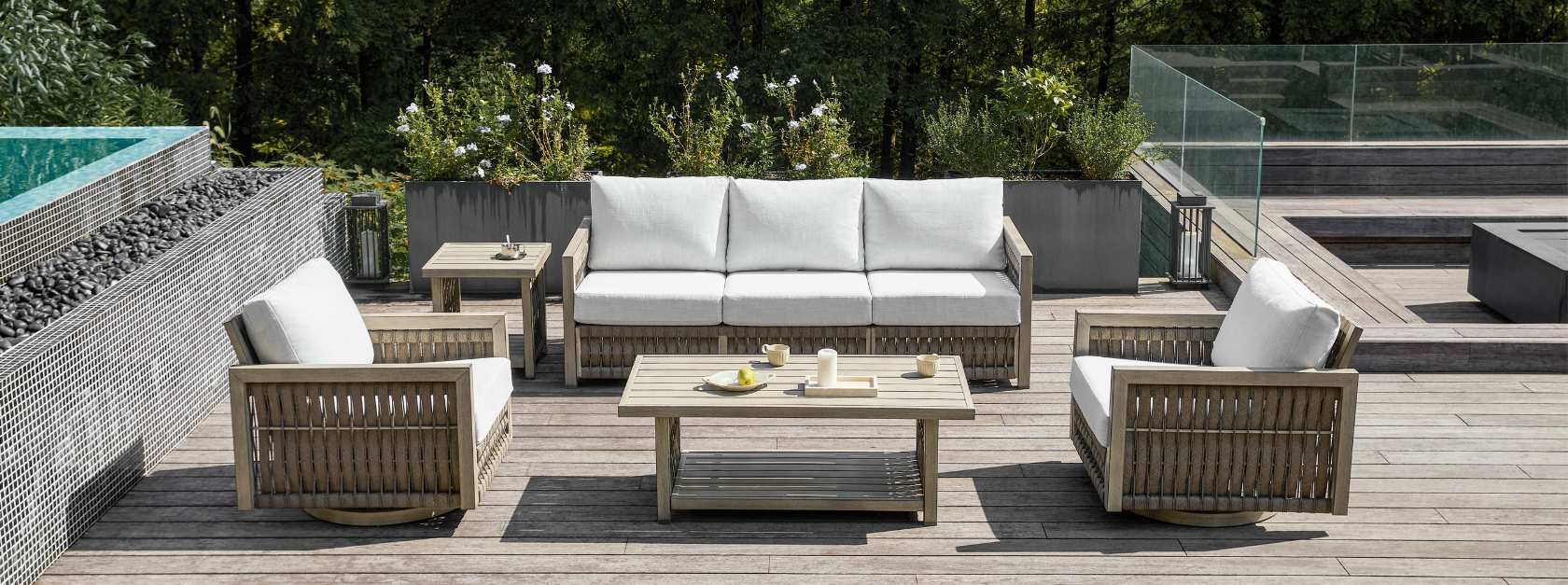


Sustainability Begins With Responsible Wood Sourcing
Sustainability in outdoor furniture begins at the material source. Teak has long been valued for strength and natural weather resistance, yet unmanaged harvesting can harm ecosystems. Sustainable teak patio sets rely on responsibly managed plantations or recycled wood sources. Certified forestry programs ensure trees are replanted and biodiversity remains protected. Responsible sourcing reduces illegal logging and habitat destruction. Some manufacturers also integrate rubberwood from managed plantations as a complementary material. Rubberwood repurposes trees that have completed latex production cycles, reducing waste. When patio sets use certified or reclaimed teak, environmental pressure decreases. Responsible sourcing ensures long-term forest health while maintaining material quality for outdoor furniture production.
Recycled Teak Reduces Environmental Footprint
Recycled teak plays a major role in sustainable patio furniture design. Salvaged teak from old buildings, boats, or industrial structures gains a second life as outdoor furniture. This practice prevents usable hardwood from entering landfills. Sustainable teak patio sets made from reclaimed wood lower demand for newly harvested timber. Recycled teak often features dense grain and natural weathering, enhancing character and strength. Processing reclaimed wood consumes fewer natural resources compared to fresh logging. Manufacturers reshape and refinish the wood to meet structural standards. By extending the lifecycle of existing timber, recycled teak supports circular economy principles and reduces overall environmental impact.
Durability Extends Product Lifespan And Reduces Waste
Durability directly influences sustainability. Furniture that lasts longer reduces replacement frequency and material consumption. Teak naturally resists moisture, insects, and decay. Sustainable teak patio sets leverage this durability to support long-term outdoor placement. High-density wood fibers provide structural strength. Proper joinery and reinforced construction improve stability over time. Durable design minimizes breakage and repair needs. When patio furniture remains functional for many years, fewer resources are consumed in manufacturing replacements. Longevity remains one of the most practical forms of environmental responsibility. Durable teak furniture reduces waste and lowers lifecycle emissions.
Natural UV Resistance Supports Outdoor Performance
Sunlight exposure challenges outdoor furniture materials. Ultraviolet radiation can weaken or discolor many surfaces. Teak contains natural oils that help resist UV-related degradation. Sustainable teak patio sets benefit from this inherent protection. Designers often enhance UV performance through environmentally safe treatments rather than synthetic chemical coatings. Natural oil finishes nourish wood fibers without introducing harmful substances. UV resistance preserves appearance and structural integrity. This reduces the need for frequent refinishing or replacement. Over time, natural weather resistance contributes to sustainability by extending the usable life of patio furniture.
Eco-Friendly Finishes Replace Harmful Chemical Treatments
Traditional wood treatments sometimes rely on volatile organic compounds and harsh preservatives. Sustainable teak patio sets prioritize eco-friendly coatings and oils. Water-based sealants reduce chemical emissions during production and use. Natural plant-based oils protect wood while maintaining breathability. These alternatives lower indoor and outdoor air pollution. Eco-conscious finishing processes also improve worker safety during manufacturing. When furniture avoids harmful chemical treatments, environmental impact decreases across the supply chain. Responsible finishing methods support healthier outdoor environments and align with sustainability goals.
Corrosion-Resistant Hardware Improves Long-Term Use
Sustainability involves more than wood selection. Hardware components affect durability and maintenance needs. Stainless steel or coated fasteners resist corrosion in humid or coastal environments. Sustainable teak patio sets incorporate rust-resistant connectors to prevent structural weakening. Corrosion-resistant hardware reduces repair frequency. Strong joinery preserves furniture integrity during temperature changes. Climate fluctuations place stress on outdoor furniture connections. Durable hardware prevents early failure. By ensuring every component withstands environmental stress, manufacturers improve longevity. This comprehensive approach supports responsible consumption and minimizes resource waste.
Climate Adaptability Enhances Environmental Responsibility
Outdoor furniture must perform in varied climates. Teak naturally adapts to humidity, rainfall, and temperature changes. Sustainable teak patio sets include design features that allow wood to expand and contract without cracking. Proper spacing between slats improves ventilation and drainage. This prevents moisture buildup and mold growth. Climate adaptability reduces structural damage caused by seasonal shifts. Furniture that handles environmental variation lasts longer. Long-term performance reduces demand for new production. Designing for climate resilience supports sustainable outdoor living.
Comparing Sustainable And Conventional Patio Set Practices
| Aspect | Sustainable Teak Patio Sets | Conventional Wood Patio Sets |
|---|---|---|
| Wood Source | Certified Or Recycled Teak | Unverified Timber |
| Finishes | Eco-Friendly Oils Or Water-Based Sealants | Chemical-Heavy Coatings |
| Hardware | Corrosion-Resistant Materials | Standard Metal Fasteners |
| Lifespan | Long-Term Outdoor Durability | Moderate Durability |
| Environmental Impact | Reduced Carbon And Waste | Higher Resource Consumption |
This comparison highlights how responsible material selection and finishing processes influence sustainability. Sustainable teak patio sets demonstrate measurable environmental advantages through sourcing, durability, and reduced emissions.
Reduced Chemical Exposure Benefits Outdoor Spaces
Outdoor living areas connect directly with nature. Furniture that limits chemical emissions supports healthier environments. Sustainable teak patio sets avoid harsh solvents and synthetic preservatives. Natural oil finishes release fewer pollutants into surrounding air. Reduced chemical exposure benefits families, pets, and garden ecosystems. Over time, environmentally friendly materials preserve soil and water quality near patio areas. Responsible furniture choices contribute to broader environmental protection. Sustainable design supports both ecological health and user well-being.
Responsible Manufacturing And Energy Efficiency
Manufacturing practices influence sustainability outcomes. Sustainable teak patio sets often come from facilities that optimize energy efficiency. Using recycled wood reduces processing demands. Efficient production lowers carbon emissions. Manufacturers committed to sustainability frequently implement waste reduction strategies. Wood offcuts may be repurposed into smaller components. Efficient packaging reduces material use during shipping. Responsible manufacturing extends sustainability beyond raw material sourcing. Comprehensive environmental practices strengthen overall product responsibility.
Long-Term Value Aligns With Environmental Goals
Sustainability connects closely with long-term value. Furniture that remains functional and visually appealing for many years reduces overall consumption. Sustainable teak patio sets balance design, durability, and environmental responsibility. Consumers benefit from reliable performance and reduced maintenance. Over time, this reduces both financial and ecological costs. Investing in long-lasting patio furniture supports conscious purchasing decisions. Sustainable choices contribute to reduced waste streams and healthier ecosystems.
Frequently Asked Questions About Sustainable Teak Patio Sets
What Makes Teak Patio Sets Sustainable Compared To Other Wood Furniture?
Sustainable teak patio sets differ from conventional furniture because they prioritize responsible sourcing and environmentally friendly production methods. Certified plantations ensure forests are replanted and biodiversity remains protected. Recycled teak reduces the need for new logging. Eco-friendly finishes replace chemical-heavy treatments. Durable construction extends product lifespan, lowering replacement frequency. Together, these factors reduce environmental impact across the product lifecycle. Sustainability involves material origin, manufacturing processes, and long-term use. Teak’s natural resistance to decay and insects further enhances durability, making it suitable for responsible outdoor furniture design.
How Does Recycled Teak Contribute To Environmental Protection?
Recycled teak contributes to environmental protection by extending the life of existing hardwood resources. Salvaged wood from structures or vessels gains renewed purpose as patio furniture. This reduces landfill waste and decreases demand for new timber harvesting. Processing reclaimed wood often requires less energy than cutting and drying freshly harvested trees. Sustainable teak patio sets made from recycled materials align with circular economy principles. Reusing durable hardwood lowers overall carbon emissions associated with logging and transportation. Environmental benefits accumulate over time through reduced deforestation and improved resource efficiency.
Are Sustainable Teak Patio Sets Suitable For Harsh Outdoor Climates?
Sustainable teak patio sets perform well in diverse climates because teak naturally resists moisture, insects, and UV exposure. Responsible manufacturers design joints and hardware to withstand expansion and contraction. Corrosion-resistant fasteners prevent structural weakening in humid or coastal areas. Eco-friendly finishes protect surfaces without harming the environment. These features ensure durability across temperature fluctuations and rainfall exposure. Long-term performance reduces replacement frequency, supporting sustainability goals. Climate resilience strengthens both environmental and practical value, making sustainable teak suitable for varied outdoor settings.