
How Does HDPE Work for Outdoor Dining Chairs?
An HDPE patio dining chair with armrest for patio use combines outdoor durability with practical dining comfort. High-density polyethylene (HDPE) is a thermoplastic polymer valued for its moisture resistance and low maintenance requirements. Unlike untreated wood, HDPE does not readily absorb water or develop splinters through ordinary weather exposure. Manufacturers can mold or machine the material into seats, backrests, armrests, and structural components. These properties make it suitable for residential patios, restaurant terraces, hotel courtyards, and commercial outdoor dining areas. However, material selection alone does not guarantee a reliable chair. Buyers should also evaluate structural design, hardware quality, dimensions, and manufacturing consistency. Evaluating these factors helps purchasers compare products based on practical performance rather than appearance and advertised durability.
Which HDPE Material Qualities Matter Most?
Material composition strongly influences outdoor performance and long-term value. Virgin HDPE generally offers more predictable properties than poorly controlled recycled material. Recycled HDPE can also perform well when manufacturers maintain consistent feedstock quality and suitable processing conditions. Ask suppliers about resin grades, ultraviolet stabilizers, colorants, and material specifications. UV stabilizers help limit sunlight-related degradation, while suitable pigments support color consistency. Inadequate stabilization can contribute to fading, surface chalking, and reduced impact resistance. Material thickness also matters, but thicker components do not automatically produce stronger furniture. Internal geometry, reinforcement, and connection design influence the final result. Buyers should request technical specifications and representative samples rather than relying solely on marketing descriptions. Consistent production controls provide stronger evidence of quality than material labels alone.
How Should You Evaluate Chair Frame Construction?
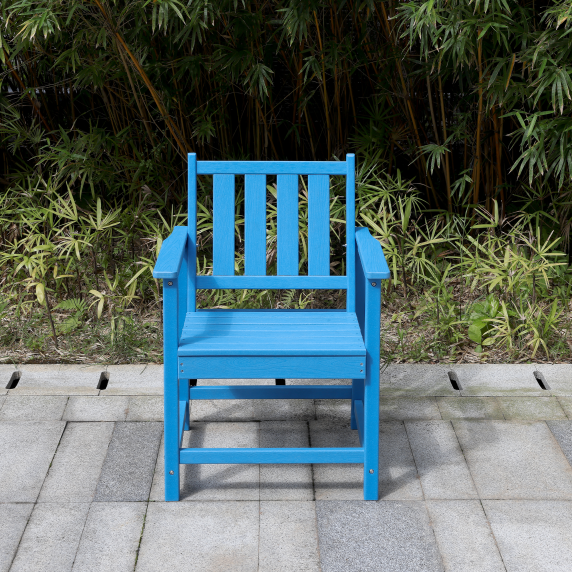
A reliable HDPE patio dining chair with armrest for patio use needs stable legs, secure joints, and sufficient support beneath the seat. Inspect the frame layout to identify potential weak points around the backrest, armrests, and seat supports. Screws, bolts, inserts, and connecting plates should fit properly without excessive movement. Stainless steel hardware can improve corrosion resistance, especially in coastal environments. However, buyers should verify the actual steel grade and suitability for local exposure conditions. Some designs use metal reinforcement to support areas that experience concentrated loads. Others rely on carefully engineered HDPE sections and mechanical connections. Neither approach guarantees strength without appropriate testing. Ask suppliers for rated load capacity, test methods, and assembly instructions. A chair should remain stable during ordinary sitting, standing, and movement without rocking or loosening prematurely.
How Does an HDPE Patio Dining Chair With Armrest for Patio Use Ensure Comfort?
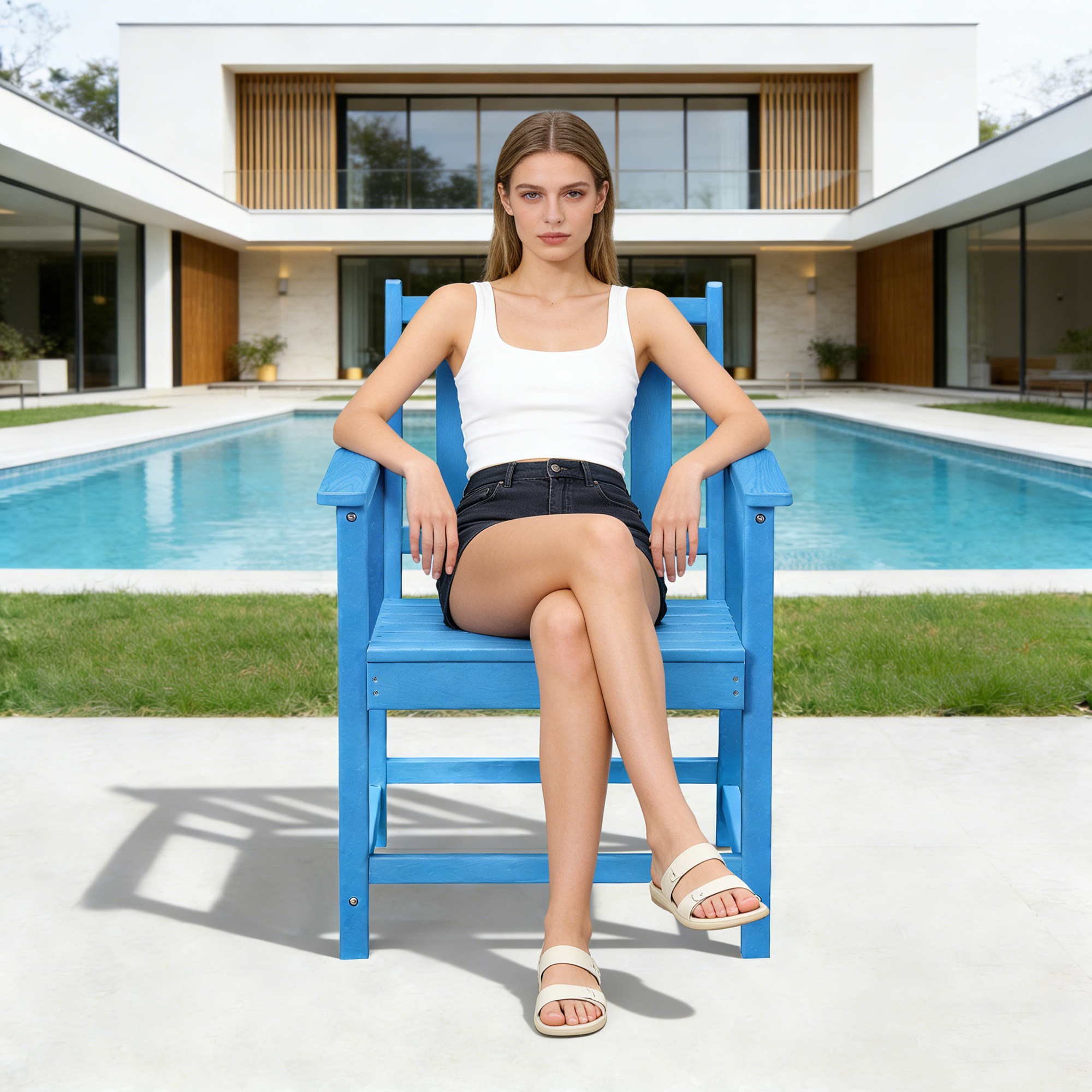
Armrests affect comfort, posture, and the practical usability of a dining chair. Their height should allow users to rest their forearms without raising their shoulders unnecessarily. Excessively high armrests can interfere with table access, while low armrests may provide insufficient support. Rounded edges generally feel more comfortable than sharp corners during extended meals. Armrest width also influences comfort, particularly when users sit for long periods. Buyers should assess the distance between armrests and the available seating space. Smooth transitions between the armrests and backrest can improve support and reduce uncomfortable pressure points. Sample testing helps reveal problems that photographs cannot show. For hospitality projects, evaluate comfort across different body sizes before approving a large order. Practical ergonomics often matter more than decorative styling.
How Should You Choose An HDPE Patio Dining Chair With Armrest for Patio Seating?
Seat dimensions determine whether a chair accommodates different users comfortably. Seat width should provide sufficient room without making the chair unnecessarily bulky. Seat depth should support the thighs while leaving comfortable space behind the knees. Excessive depth can make shorter users lean forward, while insufficient depth may reduce support. Seat height should work with the dining table and allow users to place their feet comfortably. Backrest angle also affects posture during meals. A more upright position may suit formal dining, while a gently reclined design can feel more relaxed. Check the published dimensions instead of estimating proportions from product photographs. If possible, test a physical sample with the intended dining table. Commercial buyers should consider user diversity, seating duration, and accessibility requirements.
Which Outdoor Conditions Can HDPE Chairs Handle?
An HDPE patio dining chair with armrest for patio use can withstand many outdoor conditions, but material formulation and product design determine its actual performance. HDPE resists moisture and does not rust, making it suitable for many outdoor environments. Nevertheless, prolonged sunlight can gradually affect polymers without adequate UV protection. Dark colors may become hotter under direct sunlight, influencing surface comfort during summer. Temperature changes can also cause plastic components to expand and contract. Manufacturers should account for these movements when designing joints and fasteners. Rain exposure generally presents fewer concerns for HDPE than for untreated wood. However, standing water around poorly designed connections may affect metal hardware or encourage dirt accumulation. Coastal locations require particular attention to corrosion-resistant fasteners and cleaning routines. Buyers should also consider wind exposure, because lightweight furniture may move during storms. Product placement, anchoring options, and seasonal storage can improve practical performance.
How Can You Compare HDPE Chair Finishes and Colors?
Surface finishes influence appearance, cleaning requirements, and customer expectations. Smooth surfaces usually allow quick wiping, while textured finishes can help create a wood-like appearance. However, deep textures may collect dust and food residue in outdoor dining environments. Color consistency matters when buyers order multiple chairs or replenish inventory later. Ask suppliers whether the color extends throughout the material or depends on a surface coating. Integral color can reduce concerns about superficial coating wear, although it cannot eliminate fading caused by inadequate UV protection. Request samples produced with the intended resin and color formulation. Compare them under natural and indoor lighting before approving production. For commercial projects, confirm the approved color reference, finish, and acceptable variation range. Written specifications help reduce disputes between buyers and manufacturers.
What Maintenance Do HDPE Dining Chairs Require?
Routine maintenance helps preserve appearance and keeps connections secure. Most ordinary dirt can be removed with water, mild detergent, and a soft cloth. A soft-bristle brush can help clean textured surfaces without aggressive abrasion. Avoid unapproved solvents, harsh chemicals, and abrasive pads that may damage the finish. After cleaning, rinse away detergent residue and allow the chair to dry naturally. Periodically inspect bolts, inserts, joints, and metal supports for looseness or corrosion. Tighten fasteners according to the manufacturer's instructions rather than applying excessive force. Food stains and sunscreen residue should be removed promptly to prevent persistent discoloration. In colder climates, follow the supplier's recommendations for storage and winter exposure. Proper care cannot correct poor manufacturing, but it can reduce avoidable wear and support a longer service life.
How Do You Match Chairs With Patio Dining Tables?
Chair and table compatibility depends on more than matching colors or design styles. Measure the table height, apron depth, and distance between supporting legs before selecting chairs. Armrests must fit beneath the tabletop if users expect to push chairs fully inward. Otherwise, chairs may occupy additional patio space when nobody uses them. Allow enough clearance behind each chair for people to sit down and stand up comfortably. The required space depends on the layout, circulation routes, and intended dining experience. Rectangular tables often support orderly seating arrangements, while round tables may require different chair spacing. For hospitality venues, consider service access and safe movement between tables. Measure the complete assembled chair rather than relying on seat width alone. These checks prevent expensive furniture mismatches after delivery.
What Should Buyers Check Before Placing an Order?
Commercial buyers should confirm specifications before approving samples or production. A supplier's product description may omit important details about materials, tolerances, or testing. Request a dimensioned drawing that identifies seat height, overall width, armrest height, and assembled depth. Verify load capacity through documented testing rather than visual inspection alone. Clarify whether the quoted price includes hardware, assembly instructions, protective packaging, and replacement parts. Buyers should also review sample approval procedures, production tolerances, and inspection arrangements. For larger orders, agree on acceptable cosmetic defects and dimensional variation before manufacturing begins. Written requirements create a consistent basis for evaluating deliveries and resolving disagreements. The following table summarizes useful purchasing checks and the evidence buyers should request.
| Inspection item | What to verify | Useful evidence |
|---|---|---|
| Material quality | HDPE grade, UV stabilization, color consistency | Material specification and sample |
| Dimensions | Seat height, seat depth, armrest clearance | Dimensioned technical drawing |
| Structural strength | Stability, joints, rated load capacity | Test report and assembly instructions |
| Hardware | Fastener material and corrosion resistance | Hardware specification |
| Finish | Surface quality and acceptable color variation | Approved reference sample |
| Order fulfillment | Packaging, delivery terms, replacement support | Written quotation and purchase agreement |
How Should Buyers Interpret These Inspection Results?
Use the checklist to compare suppliers against identical requirements. A detailed specification makes competing quotations easier to evaluate. If one supplier offers a lower price, verify whether the products use comparable materials and hardware. Request clarification whenever testing methods or stated capacities differ. Samples should represent the proposed production materials and finishing processes. Buyers can also arrange pre-shipment inspections for larger orders. Inspectors should compare finished products against approved drawings, samples, and written acceptance criteria. Documented checks reduce the risk of receiving inconsistent furniture. These practices are especially valuable for distributors, hospitality groups, and retailers purchasing repeated batches. Applying these checks to every HDPE patio dining chair with armrest for patio orders also helps buyers maintain consistent quality across different production batches.
How Can You Balance Price, Quality, and Service Life?
Purchase price represents only one part of the total ownership cost. Buyers should also consider cleaning labor, transportation, replacement frequency, and warranty coverage. A low-cost chair may become expensive if joints loosen quickly or colors fade prematurely. Conversely, a premium product may offer little additional value when its features exceed actual project needs. Compare specifications, expected exposure conditions, and maintenance requirements before making a decision. For wholesale orders, consistent quality and reliable replenishment can matter more than small differences in unit price. Ask manufacturers about spare parts, production lead times, and procedures for handling defects. Use the following priorities when evaluating competing offers:
-
Confirm material specifications and UV protection.
-
Compare dimensions, armrest comfort, and table compatibility.
-
Verify structural testing and hardware suitability.
-
Review samples, packaging, warranty terms, and replacement support.
-
Calculate expected maintenance and replacement costs.
-
Assess production consistency and future supply availability.
How Do These Priorities Support Better Purchasing Decisions?
Apply these priorities according to the intended use and purchasing budget. A residential buyer may value appearance and simple maintenance most highly. A restaurant operator may prioritize durability, stackability, and efficient cleaning. Distributors often need consistent specifications, dependable production capacity, and stable product colors. No single feature determines overall value. Instead, buyers should compare verified performance with the demands of their specific environment. Ask suppliers to explain any significant differences between similar models. Record the final selection criteria in the purchase agreement. This approach supports transparent supplier comparisons and helps purchasing teams justify their decisions. A well-matched chair should satisfy practical needs without unnecessary features or avoidable maintenance expenses.
Frequently Asked Questions About HDPE Patio Dining Chairs
Is HDPE suitable for outdoor dining chairs?
Yes, HDPE is suitable for many outdoor dining applications because it resists moisture and does not rust. Its performance depends on material formulation, UV stabilization, structural design, and manufacturing quality. Prolonged sunlight can still affect inadequately stabilized plastic. Temperature changes may also influence dimensions and connections. Buyers should examine the resin specifications and ask how the manufacturer evaluates weathering performance. Properly designed chairs can serve residential patios, restaurant terraces, and other outdoor dining areas. Regular cleaning helps preserve their appearance. Before purchasing, compare the chair's intended exposure conditions with the supplier's recommendations. Material selection should always accompany checks of stability, load capacity, and hardware quality.
How much weight can an HDPE patio dining chair support?
Weight capacity varies by design, material properties, component dimensions, and connection quality. There is no single capacity that applies to every HDPE dining chair. Buyers should request a documented rating for the exact model under consideration. Ask whether the manufacturer conducted static load, stability, or durability testing. Confirm the applicable test method and whether the results cover the assembled product. Seat supports, leg connections, and armrest joints deserve particular attention. Avoid estimating capacity from appearance or material thickness alone. For commercial use, select products that meet the project's requirements and follow the manufacturer's stated limits. Proper assembly and routine hardware inspections also help maintain safe performance.
Can HDPE dining chairs stay outside all year?
Many HDPE dining chairs can remain outdoors throughout the year, but local conditions and product specifications matter. UV-stabilized material generally handles sunlight better than formulations without adequate protection. Rain usually presents limited problems for the plastic itself, although metal fasteners may still corrode. Freezing temperatures, strong winds, heavy snow, and coastal exposure require additional consideration. Follow the manufacturer's storage and weather recommendations for the specific model. Clean the chair periodically and inspect its joints after severe weather. Move lightweight furniture to a sheltered area when storms threaten. Suitable covers or seasonal storage may help protect the finish and hardware. Outdoor durability depends on the entire chair, not HDPE alone.