
Choosing an Outdoor Bar Height Table for Patio Spaces
An outdoor bar height table for patio spaces combines elevated dining surfaces with practical seating arrangements for casual outdoor activities. Unlike conventional dining furniture, bar-height tables create a raised gathering area that encourages relaxed conversations and informal entertainment. Their distinctive proportions also improve visibility across gardens, poolside surroundings, and open landscapes. However, successful furniture selection involves more than choosing an attractive tabletop design. Buyers must evaluate construction materials, surface dimensions, frame stability, and compatibility with elevated seating. Outdoor environments introduce additional concerns, including ultraviolet exposure, moisture accumulation, temperature fluctuations, and uneven flooring. These conditions directly influence material durability and long-term structural performance. Careful consideration of these factors helps homeowners establish comfortable, functional outdoor spaces without sacrificing visual appeal or maintenance convenience.
How Table Height and Dimensions Affect Patio Comfort
Table height directly influences seating posture, legroom, and accessibility within outdoor gathering areas. Standard bar-height tables generally measure 40–42 inches, while counter-height models typically range from 34–36 inches. Conventional dining tables usually stand approximately 28–30 inches tall. These differences determine which seating configurations provide suitable comfort during extended use. Bar stools commonly feature seat heights around 28–30 inches, depending on their construction. Ideally, the vertical distance between the stool seat and tabletop should approach 10–12 inches. This clearance accommodates natural leg positioning without excessive knee compression. Buyers should also measure available floor space before selecting furniture dimensions. Allow sufficient room for stool movement and pedestrian circulation around the table. Measuring these clearances prevents overcrowding and improves accessibility across compact balconies and spacious patios.
Comparing HDPE, Wood, Aluminum, and Steel Materials
Material selection plays a significant role in outdoor furniture durability, maintenance requirements, and environmental suitability. High-density polyethylene, commonly called HDPE, offers low moisture absorption and resistance to conventional biological decay. Its polymer structure provides excellent chemical resistance and avoids the corrosion mechanisms associated with metal furniture. Manufacturers often incorporate ultraviolet stabilizers and color pigments to improve long-term sunlight performance. Natural wood offers distinctive grain patterns but requires regular protection against moisture and weathering. Aluminum provides lightweight construction and forms a protective oxide layer that limits ordinary atmospheric corrosion. Steel delivers high structural strength but requires appropriate protective coatings against rust formation. For an outdoor bar height table for patio environments, material properties should match local weather conditions. The following comparison highlights important differences among common furniture materials.
Material Comparison Table
| Material | Advantages | Limitations | Maintenance |
|---|---|---|---|
| HDPE | Low water absorption, corrosion-free polymer, UV-stabilized options | Thermal expansion, potential heat-related deformation | Mild soap and water |
| Natural Wood | Natural grain, renewable material, traditional appearance | Moisture movement, decay risk, surface weathering | Periodic sealing or refinishing |
| Aluminum | Lightweight, corrosion-resistant oxide layer | Possible denting, hot surfaces in direct sunlight | Routine cleaning and finish inspection |
| Steel | High strength, rigid structural support | Corrosion risk when protective coatings fail | Coating inspection and rust prevention |
Why Frame Construction Determines Table Stability
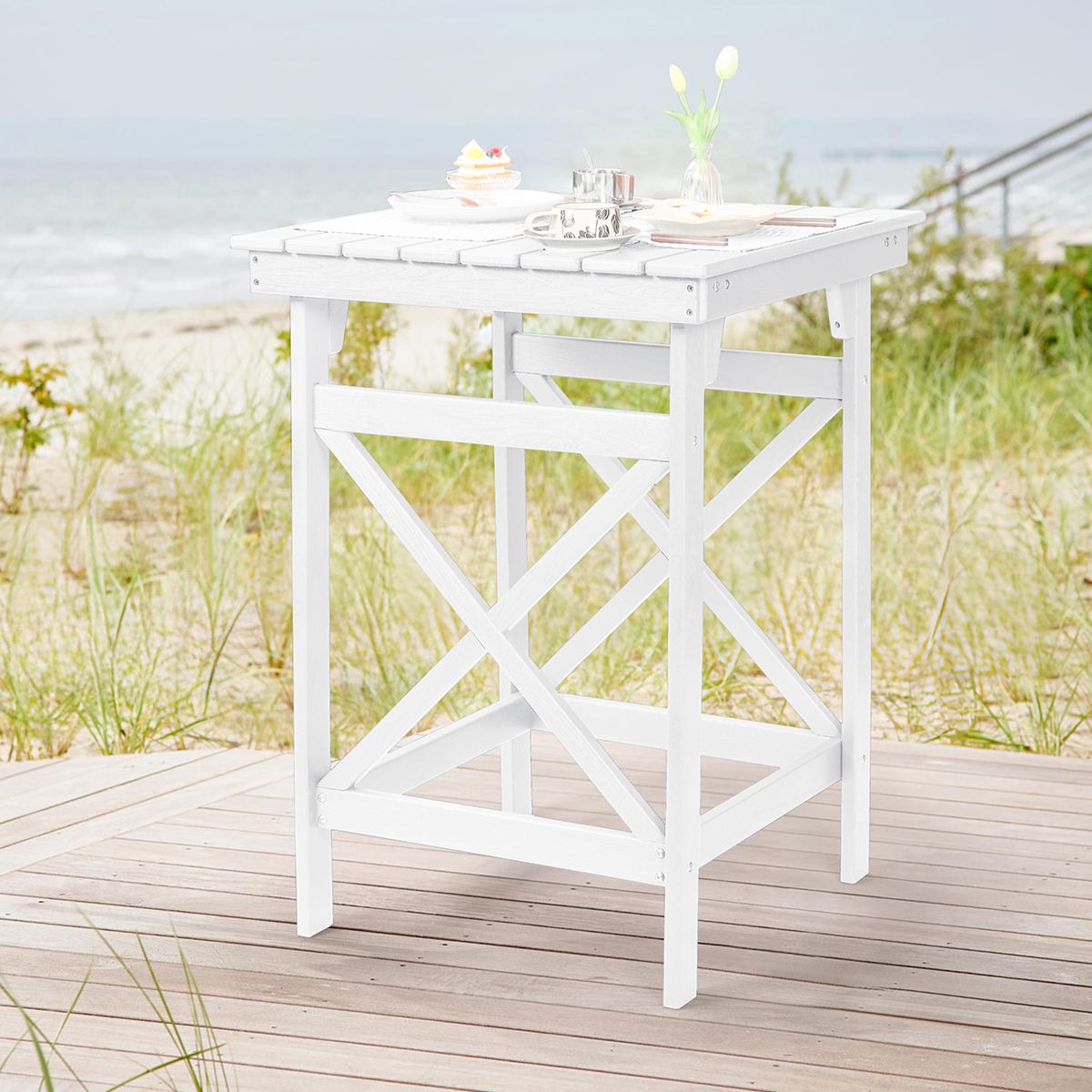
Structural stability depends on how the table frame distributes vertical loads and resists horizontal movement. Elevated furniture experiences greater overturning forces when users apply pressure near tabletop edges. Consequently, frame geometry becomes particularly important for taller outdoor furniture. X-shaped leg configurations can improve lateral support through diagonal bracing and interconnected structural members. Reinforced crossbars help limit twisting while transferring forces between opposing legs. Joint rigidity also influences performance because loose connections permit unwanted movement under repeated loading. Stainless steel fasteners provide corrosion resistance and help preserve connection integrity in humid conditions. Grade 304 stainless steel generally performs well outdoors, although chloride-rich environments require additional consideration. Buyers should inspect base dimensions, connection quality, and support placement before installation. Stable construction improves everyday usability and reduces unnecessary mechanical stress.
Weather Resistance and Long-Term Outdoor Durability
Outdoor furniture experiences continuous environmental stress from sunlight, precipitation, humidity, and temperature changes. These factors influence surface appearance, material strength, and maintenance frequency throughout the furniture's service life. An outdoor bar height table for patio use should feature materials suited to these exposure conditions. UV-stabilized HDPE resists moisture penetration and conventional wood decay, making it suitable for many uncovered outdoor settings. However, prolonged thermal exposure can cause polymer expansion and gradual dimensional changes. Appropriate material formulation and structural allowances help accommodate these effects. Slatted tabletops encourage drainage by allowing rainwater to pass between individual surface boards. This configuration reduces standing water and simplifies routine cleaning after rainfall. Protective covers may provide additional benefits during extended periods of inactivity. Regular inspection remains necessary despite weather-resistant construction.

Matching an Outdoor Bar Height Table for Patio Seating
Proper seating compatibility determines whether elevated outdoor furniture remains comfortable during everyday activities. Bar chairs should provide appropriate seat height, back support, and sufficient legroom beneath the tabletop. An outdoor bar height table for patio seating arrangements also requires careful consideration of armrest clearance. Oversized armrests may prevent chairs from sliding beneath the table when not in use. Footrests provide additional support by allowing users to reposition their legs naturally. Without adequate foot support, elevated seating can create uncomfortable pressure beneath the thighs. Some table frames incorporate horizontal footrest beams that serve both ergonomic and structural purposes. However, these features require appropriate positioning to avoid interfering with chair movement. Coordinating seat dimensions, tabletop overhang, and surrounding clearances creates a balanced arrangement for dining and conversation.
Matching Table Design with Different Outdoor Environments
Different outdoor environments require distinct furniture configurations based on available space, exposure, and intended activities. Compact balconies benefit from narrow tabletops that preserve walking space while accommodating occasional refreshments. Larger garden patios can support wider arrangements with multiple chairs and decorative accessories. Poolside installations require moisture-resistant materials and surfaces that tolerate frequent splashing. Open decks introduce additional concerns involving wind exposure, flooring movement, and furniture placement. Adirondack-inspired designs offer a relaxed appearance that complements traditional gardens and contemporary outdoor settings. Color selection also influences visual coordination with decking, railings, cushions, and surrounding landscaping. Light-colored furniture often creates an open visual atmosphere, while darker finishes establish stronger contrasts. Regardless of location, homeowners should prioritize stable positioning, circulation space, and practical access before selecting decorative features.
How Tabletop Shape and Surface Design Affect Functionality
Tabletop geometry influences furniture placement, seating capacity, and usable space during outdoor activities. Rectangular surfaces accommodate linear seating arrangements and fit naturally along walls or deck railings. Square tables create balanced layouts for smaller gatherings, while round surfaces encourage conversation from multiple directions. However, shape alone does not determine practical functionality. Tabletop thickness, edge profiles, surface texture, and support spacing also influence everyday performance. Rounded corners reduce sharp contact points in confined outdoor spaces. Slatted HDPE surfaces provide drainage openings that help remove rainwater after sudden weather changes. Properly spaced slats should also support dishes, glasses, and serving accessories without excessive gaps. Surface texture affects cleaning convenience and the stability of smaller objects. Buyers should evaluate these characteristics alongside their intended dining activities and furniture arrangements.
Assembly, Cleaning, and Routine Maintenance Requirements
Regular maintenance helps preserve furniture appearance, connection integrity, and long-term usability. HDPE surfaces generally require less intensive upkeep than untreated wooden furniture. Mild soap and warm water remove ordinary dirt, pollen, and food residue without aggressive cleaning chemicals. Soft cloths or nonabrasive brushes help prevent unnecessary surface scratches during cleaning. Metal fasteners also require attention because repeated loading and temperature changes can affect connection tightness. Owners should inspect structural joints periodically, particularly after frequent use or seasonal storage. Correct assembly remains equally important because misaligned components may introduce uneven loading into supporting members. Manufacturer instructions should determine fastener tightening methods and assembly sequence. Simple preventive measures can reduce avoidable deterioration while maintaining a clean, functional outdoor dining environment.
Practical Outdoor Table Maintenance Checklist
-
Weekly or as needed: Remove dust, food residue, and surface debris using mild soap and water.
-
After heavy rain: Check drainage gaps and remove trapped leaves or dirt.
-
Monthly during frequent use: Inspect structural joints, screws, and footrest connections.
-
Seasonally: Examine surfaces for discoloration, cracks, unusual movement, or wear.
-
Before extended storage: Clean the table thoroughly and allow all surfaces to dry.
-
After relocation: Confirm stable floor contact and inspect the frame for loosened connections.
Final Considerations Before Choosing a Patio Bar Table
Selecting suitable elevated patio furniture requires balancing structural performance, material durability, dimensions, and maintenance expectations. Homeowners should first verify seating compatibility and available installation space before comparing decorative features. The Polythos HDPE Adirondack Outdoor Bar Height Table C078-1 provides a practical example of these considerations. Its X-leg frame incorporates reinforced support members that improve structural rigidity during everyday use. The integrated footrest beam offers additional support, while the slatted HDPE tabletop facilitates rainwater drainage. Grade 304 stainless steel hardware contributes corrosion resistance under many outdoor conditions. An outdoor bar height table for patio installations should also accommodate surrounding furniture and circulation requirements. Ultimately, appropriate dimensions, dependable connections, and suitable weather-resistant materials contribute more to long-term satisfaction than decorative appearance alone.
Frequently Asked Questions
What Is the Ideal Height for an Outdoor Patio Bar Table?
Most outdoor bar tables measure approximately 40–42 inches tall, making them suitable for elevated seating arrangements. Compatible bar stools commonly feature seat heights between 28 and 30 inches. The difference between tabletop height and seat height should generally approach 10–12 inches for comfortable positioning. However, individual preferences and chair construction can influence suitable dimensions. Homeowners should also consider footrest placement, tabletop overhang, and knee clearance. Smaller patios require additional attention to circulation space around elevated chairs. Measuring both furniture dimensions and available floor area helps prevent uncomfortable seating arrangements and unnecessary space restrictions.
Is HDPE Better Than Wood for an Outdoor Bar Table?
HDPE offers several practical advantages over natural wood in moisture-prone outdoor environments. Its low water absorption helps prevent conventional wood-related problems, including rot and moisture-driven swelling. UV-stabilized formulations can also reduce sunlight-related deterioration when manufacturers use appropriate additives. Natural wood provides distinctive textures and traditional visual character but often requires periodic sealing or refinishing. HDPE generally needs only mild soap and water for routine cleaning. However, polymer furniture can experience thermal expansion and heat-related deformation under unsuitable conditions. The better material depends on climate, maintenance preferences, construction quality, and desired appearance rather than one characteristic alone.
How Can You Keep an Outdoor Bar Table Stable on a Patio?
Stable outdoor furniture requires proper assembly, reliable connections, and consistent contact with the supporting surface. Homeowners should position tables on level decking, concrete, or securely installed patio pavers. Uneven flooring can introduce rocking even when the furniture frame remains structurally sound. Reinforced legs and crossbars help limit lateral movement during everyday use. Tightening fasteners according to manufacturer specifications also reduces unnecessary movement at structural joints. Avoid placing excessive loads near unsupported tabletop edges. Periodic inspections should focus on screws, brackets, support beams, and floor contact points. These measures help maintain practical stability and reduce avoidable structural wear.