

Why Is an HDPE Outdoor Backless Dining Bench Suitable for Outdoor Use?
High-density polyethylene (HDPE) offers several practical advantages for outdoor dining furniture. Its polymer structure resists moisture absorption, helping prevent the swelling and rot associated with untreated timber. Unlike conventional steel, HDPE does not rust when exposed to rain or humid conditions. Manufacturers can also incorporate ultraviolet stabilizers to improve resistance to sunlight. These properties make HDPE suitable for patios, gardens, terraces, and outdoor restaurant seating areas. An HDPE outdoor backless dining bench can provide convenient seating with relatively simple maintenance. However, actual performance depends on material formulation, board thickness, frame construction, and manufacturing quality. Buyers should evaluate the complete product rather than judging durability by its material name alone.
What Makes HDPE Different From Traditional Outdoor Bench Materials?
Outdoor benches commonly use timber, metal, conventional plastics, or high-density polyethylene. Each material responds differently to moisture, temperature changes, sunlight, and repeated loading. Natural wood offers a familiar appearance but may require sealing, staining, or protective coatings. Powder-coated metal provides structural strength, although damaged coatings can expose vulnerable surfaces to corrosion. Conventional plastics vary considerably in stiffness, impact resistance, and resistance to environmental degradation. HDPE lumber combines moisture resistance with a degree of flexibility that helps it withstand everyday outdoor use. Nevertheless, material thickness and internal construction influence its strength. Solid boards generally behave differently from hollow profiles, especially under concentrated loads. Buyers should compare documented specifications and construction details before selecting furniture for demanding environments.
| Material | Weather Resistance | Maintenance | Key Consideration |
|---|---|---|---|
| HDPE | High, depending on formulation | Generally low | Check UV protection and structural design |
| Natural wood | Varies by species and treatment | Often requires periodic protection | Moisture management matters |
| Powder-coated metal | Depends on coating integrity | Inspect coating and fasteners | Damaged coatings may expose metal |
| Conventional plastic | Varies by polymer and additives | Usually low | Check stiffness and UV stability |
How Does HDPE Resist Rain, Humidity, and UV Exposure?
HDPE has low water absorption, which helps limit moisture-related dimensional changes during outdoor exposure. Rainwater generally remains on the surface instead of penetrating deeply into the polymer. Consequently, the material does not experience wood-like rot, although dirt and organic deposits can still accumulate. Humid conditions also present fewer corrosion concerns than they do for unprotected steel components. Sunlight requires separate consideration because ultraviolet radiation can gradually degrade susceptible polymers. Manufacturers may add UV stabilizers, suitable pigments, and other protective additives during production. These ingredients influence color retention, surface integrity, and long-term performance. Buyers should request relevant technical specifications instead of assuming every HDPE product offers identical protection. Regular cleaning also helps preserve appearance without replacing the need for suitable material selection.
Is an HDPE Outdoor Backless Dining Bench Durable Enough for Daily Use?
An HDPE outdoor backless dining bench can accommodate regular dining when its structure matches the intended load and usage frequency. Seat-board thickness, support spacing, frame stiffness, and fastening methods all affect performance. Widely spaced supports may allow excessive bending, even when manufacturers use durable material. Poorly secured joints can introduce movement, noise, and instability during repeated seating. Commercial venues should pay particular attention to frequent loading, customer turnover, and cleaning routines. A stable base and properly positioned supports help distribute weight across the seating surface. Buyers should request a stated load capacity and supporting test information whenever available. They should also inspect fasteners and joints for looseness. Material quality matters, but sound engineering ultimately determines whether the complete bench performs reliably.
What Are the Main Advantages of Backless HDPE Dining Benches?
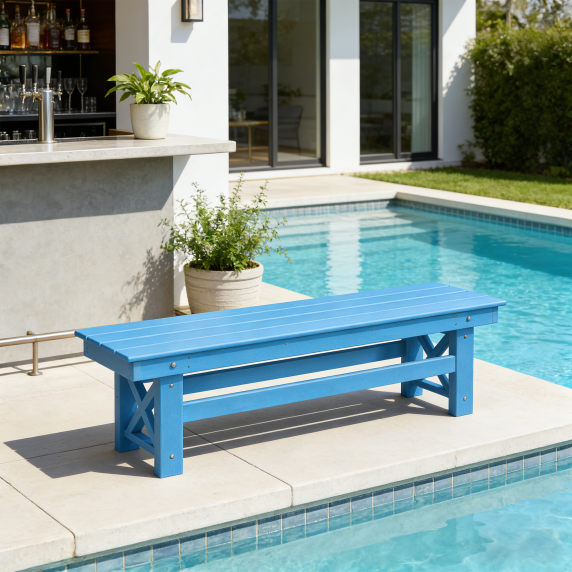
Backless seating offers layout flexibility that conventional chairs cannot always provide. Users can approach a bench from either side, while several people can share the same seating surface. This arrangement can simplify seating around rectangular dining tables and create a more open appearance. An HDPE outdoor backless dining bench also suits spaces where furniture needs frequent repositioning. Restaurants may arrange several benches along communal tables, while homeowners can use them beside garden dining areas. Available colors and dimensions depend on the manufacturer, allowing buyers to coordinate furniture with existing surroundings. However, backless designs provide less upper-body support than chairs with backrests. Buyers should consider seating duration, user comfort, accessibility, and the needs of different guests before making a final decision.
Key advantages include:
-
Moisture resistance that helps prevent rot and swelling.
-
Generally simple cleaning with mild soap and water.
-
Flexible placement around outdoor dining tables.
-
Multiple potential colors, sizes, and design configurations.
-
Suitability for many residential and commercial settings.
-
Reduced need for routine painting or protective sealing.
How Should You Maintain HDPE Outdoor Dining Furniture?
Routine maintenance helps preserve appearance and makes outdoor furniture easier to inspect. Start by removing loose dust, leaves, and other debris with a soft brush. Wash the seating surface using water, mild soap, and a nonabrasive cleaning tool. Rinse thoroughly to prevent detergent residue from accumulating along edges and joints. For greasy food stains, follow the manufacturer's recommended cleaning procedure before applying stronger products. Avoid abrasive pads, aggressive solvents, and unapproved chemicals that could damage the finish or surrounding components. Inspect fasteners periodically, especially when users frequently move the furniture. Tighten loose hardware according to the manufacturer's instructions without overtightening it. Although HDPE usually requires less maintenance than untreated wood, metal frames and connecting components may need separate care.
Does HDPE Perform Well in Hot and Cold Outdoor Conditions?
Temperature changes affect the dimensions of HDPE, causing expansion during heating and contraction during cooling. Manufacturers and installers should account for these movements when selecting board lengths, support arrangements, and fastening methods. Restrictive mounting can create unwanted stress or deformation as temperatures fluctuate. Direct sunlight introduces another consideration because exposed surfaces can become uncomfortable to touch or sit on. Darker colors may absorb more solar energy than lighter alternatives, although actual temperatures depend on several environmental factors. During colder weather, material flexibility and impact behavior depend on the specific formulation and operating conditions. Buyers should check the manufacturer's recommended temperature range and installation instructions. Suitable placement, adequate clearances, and appropriate structural design help furniture accommodate seasonal changes more reliably.
What Should Buyers Check Before Choosing an HDPE Bench?
Product dimensions determine whether a bench fits the intended dining table and available floor space. Check seat height, overall length, depth, and clearance for comfortable leg positioning. Examine board thickness, support spacing, frame material, and the stability of the feet. A wide bench may require additional structural support to limit deflection under heavier loads. Buyers should also review maximum load ratings, warranty coverage, assembly requirements, and replacement-part availability. For commercial procurement, request material specifications and documentation supporting relevant performance claims. Recycled content may be important for sustainability targets, but it should not replace structural quality checks. An HDPE outdoor backless dining bench should meet the actual demands of its installation environment. Comparing complete specifications helps buyers avoid decisions based solely on appearance or price.
| Specification | Why It Matters | Question for the Supplier |
|---|---|---|
| Seat dimensions | Determine fit and seating comfort | What are the exact assembled dimensions? |
| Load capacity | Indicates intended loading limits | Is the rating supported by testing? |
| UV stabilization | Supports outdoor color and material durability | What UV protection does the material use? |
| Frame construction | Affects rigidity and overall stability | What materials and support spacing are used? |
| Warranty terms | Clarify coverage and exclusions | Which defects and conditions are covered? |
| Recycled content | Supports material sourcing assessments | Can the supplier document recycled content? |
How Does HDPE Compare With Wood and Metal in Long-Term Costs?
Purchase price represents only one part of outdoor furniture ownership costs. Natural wood may require periodic refinishing, sealing, or replacement when environmental exposure causes deterioration. Metal furniture can offer excellent strength, but maintenance requirements depend on its protective coating, base metal, and surrounding conditions. HDPE furniture generally needs less surface treatment and routine upkeep. Cleaning expenses, hardware replacement, transportation, and expected service life still influence overall costs. Product quality also matters because poorly designed furniture may require premature repair regardless of material choice. Commercial operators should consider labor costs alongside initial purchase prices. Comparing warranty terms and maintenance schedules can clarify differences between products. Reliable lifecycle estimates require realistic usage assumptions and supplier documentation rather than unsupported claims about universal service life.
Where Do HDPE Backless Dining Benches Work Best?
Outdoor dining benches suit many environments where flexible seating and straightforward cleaning matter. Residential patios provide space for shared meals, while gardens benefit from seating that tolerates ordinary moisture exposure. Poolside dining areas may also accommodate HDPE furniture, provided users follow appropriate safety and cleaning practices. Restaurants, resorts, and hospitality venues can use benches to arrange communal seating around larger tables. Backless designs often work particularly well where guests need to enter and leave seating areas frequently. However, they may not suit prolonged dining sessions requiring substantial back support. Uneven ground can also compromise stability, regardless of material quality. Before installation, assess drainage, sunlight exposure, foot traffic, accessibility, and available clearance. Matching the bench design to its surroundings improves usability and helps maintain a comfortable dining layout.
Is HDPE a Sustainable Choice for Outdoor Dining Furniture?
HDPE is a thermoplastic that can be recycled through appropriate collection and processing systems. Some manufacturers incorporate recycled polyethylene into outdoor furniture, potentially reducing demand for virgin material. However, recycling availability varies by location, product composition, and local waste-management infrastructure. Mixed materials, metal fasteners, coatings, and contamination can complicate end-of-life processing. Buyers interested in sustainability should request clear information about recycled content and material identification. Durability can also contribute to resource efficiency when furniture remains usable for an extended period. Nevertheless, actual environmental performance depends on manufacturing processes, transportation, maintenance, and disposal practices. Avoid assuming that recyclable material automatically makes every product environmentally preferable. A credible assessment considers the complete product lifecycle, including material sourcing, expected use, repair options, and realistic recycling routes.
How Can You Evaluate the Quality of an HDPE Outdoor Backless Dining Bench?
Inspect the finished product before accepting a large order or approving a production sample. Look for consistent board dimensions, smooth edges, secure joints, and evenly aligned structural supports. Check whether the bench rocks on a level surface or shows excessive movement during normal use. Examine fasteners for suitable placement and secure engagement, particularly near board ends and load-bearing connections. Surface appearance can reveal manufacturing inconsistencies, although visual inspection cannot establish every mechanical property. Request technical specifications, warranty documentation, and available structural test reports from the supplier. For wholesale orders, confirm color consistency, dimensional tolerances, packaging standards, and replacement-part arrangements. An HDPE outdoor backless dining bench should satisfy documented requirements before shipment. Sample inspections and clearly agreed acceptance criteria can reduce procurement disputes and quality inconsistencies.
Frequently Asked Questions About HDPE Outdoor Dining Benches
Can HDPE Benches Stay Outside All Year?
Many HDPE benches can remain outdoors throughout the year when manufacturers design them for the intended climate. Their low moisture absorption helps prevent the rot and swelling associated with untreated wood. UV-stabilized formulations can also improve resistance to prolonged sunlight exposure. However, not every product offers identical weather protection or temperature tolerance. Severe weather, standing water around metal components, and repeated freeze-thaw conditions may affect the complete assembly. Follow the manufacturer's installation and maintenance recommendations, and inspect joints periodically. In locations with extreme temperatures, verify the specified operating range before purchasing. Protective storage may still benefit certain products during severe storms or prolonged periods without use.
Do HDPE Outdoor Benches Get Hot in Direct Sunlight?
Yes, HDPE seating can become hot when exposed to direct sunlight. Surface temperature depends on color, sunlight intensity, ambient temperature, wind, and exposure duration. Darker surfaces may absorb more solar energy than lighter alternatives under similar conditions. This does not mean every dark bench will reach the same temperature. Placing furniture under a shade structure can reduce direct solar exposure and improve comfort. Buyers may also compare lighter finishes and ask suppliers about suitable outdoor configurations. Allow the surface to cool before extended contact during particularly hot weather. These practical measures help improve seating comfort without changing the underlying material's moisture resistance or routine maintenance requirements.
How Long Can an HDPE Outdoor Dining Bench Last?
The service life of an HDPE bench depends on material formulation, structural design, installation, and environmental exposure. UV stabilization, appropriate board thickness, and reliable joints can support longer service under suitable conditions. Heavy commercial use may introduce more frequent loading and movement than occasional residential dining. Poor drainage, unsuitable fasteners, or excessive loading can shorten the useful life of the complete product. Routine cleaning and periodic hardware inspections help identify problems before they become more serious. Buyers should review warranty terms and request documented durability information when available. No single lifespan applies to every bench. Manufacturer specifications, actual operating conditions, and consistent maintenance provide a more reliable basis for evaluating expected performance.