
Why An Outdoor Dining Table With Umbrella Hole Matters For Shade And Comfort
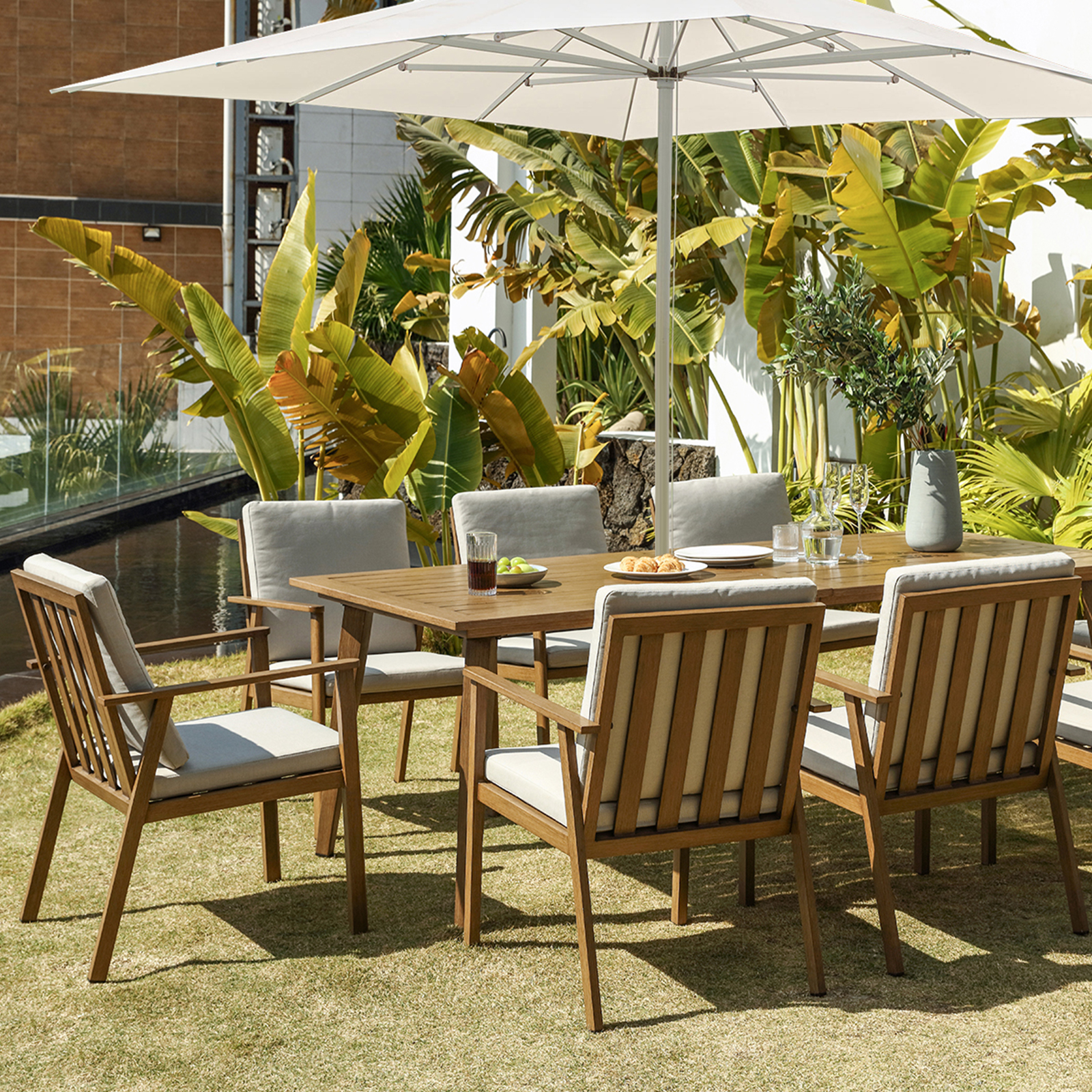
An outdoor dining table with umbrella hole directly solves one of the most common outdoor dining problems: inconsistent shade. While pergolas or fixed awnings offer coverage, they are not always available or adjustable. A center umbrella provides flexible, targeted shade that moves with the sun and adapts to different seating arrangements. This makes the dining area more comfortable during long lunches, afternoon gatherings, or casual evening meals when sunlight can still be intense.
Beyond comfort, shade impacts how people actually use outdoor furniture. When guests feel overheated, they tend to shorten meals or move indoors. An umbrella hole keeps diners cooler, protects skin from direct sun exposure, and prevents plates and drinks from warming too quickly. Over time, this small structural feature significantly increases how often a table is used, turning it from a decorative piece into a functional gathering spot.
Key Benefits Of Built-In Umbrella Holes
-
Provides adjustable shade without permanent structures
-
Enhances comfort during extended outdoor meals
-
Protects food and beverages from direct sunlight
-
Improves usability during peak daytime hours
After considering these benefits, it becomes clear that an umbrella hole is not a decorative extra but a functional feature that directly influences how enjoyable and practical outdoor dining becomes throughout the year.
Understanding Umbrella Hole Design And Structural Stability
The design of the umbrella hole plays a major role in table stability and safety. A well-engineered outdoor dining table with umbrella hole includes reinforced framing around the opening to prevent wobbling or cracking over time. Poorly designed holes may weaken the tabletop, especially when supporting larger umbrellas that catch wind or shift weight during use.
Hole diameter is another critical detail. Most outdoor umbrellas use poles ranging from 1.5 to 2 inches in diameter, and tables should accommodate this range with either a universal opening or removable inserts. A tight fit reduces movement, which minimizes stress on the table surface. In addition, tables designed for umbrellas often include a support ring beneath the tabletop, connecting the hole to the frame for added strength.
Important Structural Elements To Look For
-
Reinforced ring or collar around the umbrella hole
-
Compatibility with standard umbrella pole diameters
-
Support brackets connecting hole to table frame
-
Balanced leg placement to counter umbrella weight
When these structural details are present, the umbrella hole enhances functionality without compromising the table’s long-term stability, even in breezy outdoor conditions.
Choosing The Right Table Size And Umbrella Placement
Selecting the correct table size is essential when planning to use an umbrella. An outdoor dining table with umbrella hole should provide enough surface area so the umbrella shades all seated guests evenly. Smaller tables may leave outer seats exposed, while oversized tables paired with undersized umbrellas can create uneven shade distribution.
Round tables tend to work exceptionally well with center umbrellas because the shade radiates evenly. Rectangular tables also work, but they require larger umbrellas or offset canopies to cover the full seating area. The key is matching table dimensions with umbrella canopy size to avoid partial shading or imbalance.
Table Size Considerations For Umbrella Use
-
Round tables provide uniform shade coverage
-
Rectangular tables require larger canopy diameters
-
Six-seat tables typically need umbrellas 7.5–9 feet wide
-
Eight-seat tables often require umbrellas 9–11 feet wide
After evaluating size compatibility, the umbrella becomes an integrated part of the dining setup rather than an awkward add-on, ensuring visual balance and functional shade for every seat.
Material Choices And Weather Performance With Umbrella Holes
Material selection directly impacts how well an outdoor dining table with umbrella hole performs over time. Because the umbrella hole introduces an opening in the tabletop, the surrounding material must resist moisture penetration, expansion, and corrosion. Aluminum, treated steel, and high-density resin are especially well-suited for this design because they resist warping and rust.
Wood tables can also work when properly sealed, but they require additional maintenance around the umbrella hole to prevent water infiltration. Composite materials and powder-coated metals offer an excellent balance of durability and low maintenance, making them ideal for climates with frequent rain or strong sun exposure.
| Material Type | Weather Resistance | Maintenance Level | Suitability For Umbrella Hole |
|---|---|---|---|
| Aluminum | Excellent | Low | Very High |
| Powder-Coated Steel | High | Medium | High |
| Teak Or Hardwood | Medium | High | Moderate |
| Resin Or Composite | Excellent | Low | Very High |
Choosing a weather-resistant material ensures that the umbrella hole remains structurally sound and visually appealing even after years of outdoor exposure.
Real Outdoor Dining Scenarios That Benefit From Umbrella Tables
An outdoor dining table with umbrella hole fits seamlessly into a wide range of real-life outdoor scenarios. Family lunches, weekend barbecues, and casual brunches all benefit from adjustable shade, especially in open backyards without natural cover. For households with children or older family members, shade adds an extra layer of comfort and safety.
In social settings, umbrellas also create a defined dining zone, making outdoor spaces feel more organized and intentional. Whether placed on a patio, deck, or garden area, the umbrella visually anchors the table and enhances the atmosphere, encouraging guests to linger longer.
Common Use Cases
-
Backyard family meals during sunny afternoons
-
Poolside dining where direct sun is unavoidable
-
Apartment patios without overhead shade
-
Garden dining areas with seasonal sun exposure
These scenarios highlight how a simple umbrella hole transforms a standard table into a versatile, comfort-focused outdoor centerpiece.
Maintenance And Long-Term Care Around Umbrella Holes
Proper maintenance ensures the longevity of an outdoor dining table with umbrella hole. The area around the hole should be cleaned regularly to prevent debris buildup, which can trap moisture. Using a protective cap when the umbrella is removed helps keep water out and maintains a clean appearance.
Umbrella poles should also be checked periodically for movement or wear, as excessive wobbling can stress the table structure. Choosing a weighted umbrella base adds stability and reduces pressure on the table itself, preserving both the table and umbrella over time.
Maintenance Best Practices
-
Use hole caps when umbrella is not installed
-
Clean around the opening after rain or storms
-
Pair with a stable umbrella base
-
Inspect support rings and fittings seasonally
These simple habits protect your investment and ensure consistent performance throughout multiple outdoor seasons.
FAQ: Outdoor Dining Table With Umbrella Hole
How Does An Umbrella Hole Affect Table Stability Over Time?
An umbrella hole does not automatically weaken a table if it is properly designed and reinforced. High-quality outdoor dining tables with umbrella holes include structural supports around the opening that distribute weight evenly across the frame. Over time, stability is maintained when the umbrella pole fits snugly and is paired with a suitable base. Problems usually arise only with poorly constructed tables or oversized umbrellas used without adequate support. Choosing a table specifically designed for umbrella use ensures long-term structural integrity and safe daily use.
What Umbrella Size Works Best With An Outdoor Dining Table With Umbrella Hole?
The ideal umbrella size depends on table dimensions and seating capacity. For four-seat tables, umbrellas around 7 feet provide adequate shade, while six-seat tables typically require 7.5 to 9 feet canopies. Larger tables may need umbrellas up to 11 feet wide. The goal is full coverage without excessive overhang that could catch wind. Matching umbrella size to table shape and seating layout ensures balanced shade and minimizes stress on the umbrella hole and table frame.
Can An Outdoor Dining Table With Umbrella Hole Be Used Without An Umbrella?
Yes, most outdoor dining tables with umbrella holes are designed to function perfectly without an umbrella. Many models include removable caps that cover the hole, creating a smooth tabletop surface. This flexibility allows homeowners to adapt their setup based on season or weather. During cooler months or shaded conditions, the table remains visually clean and fully functional, while the option to add shade remains available whenever needed.