
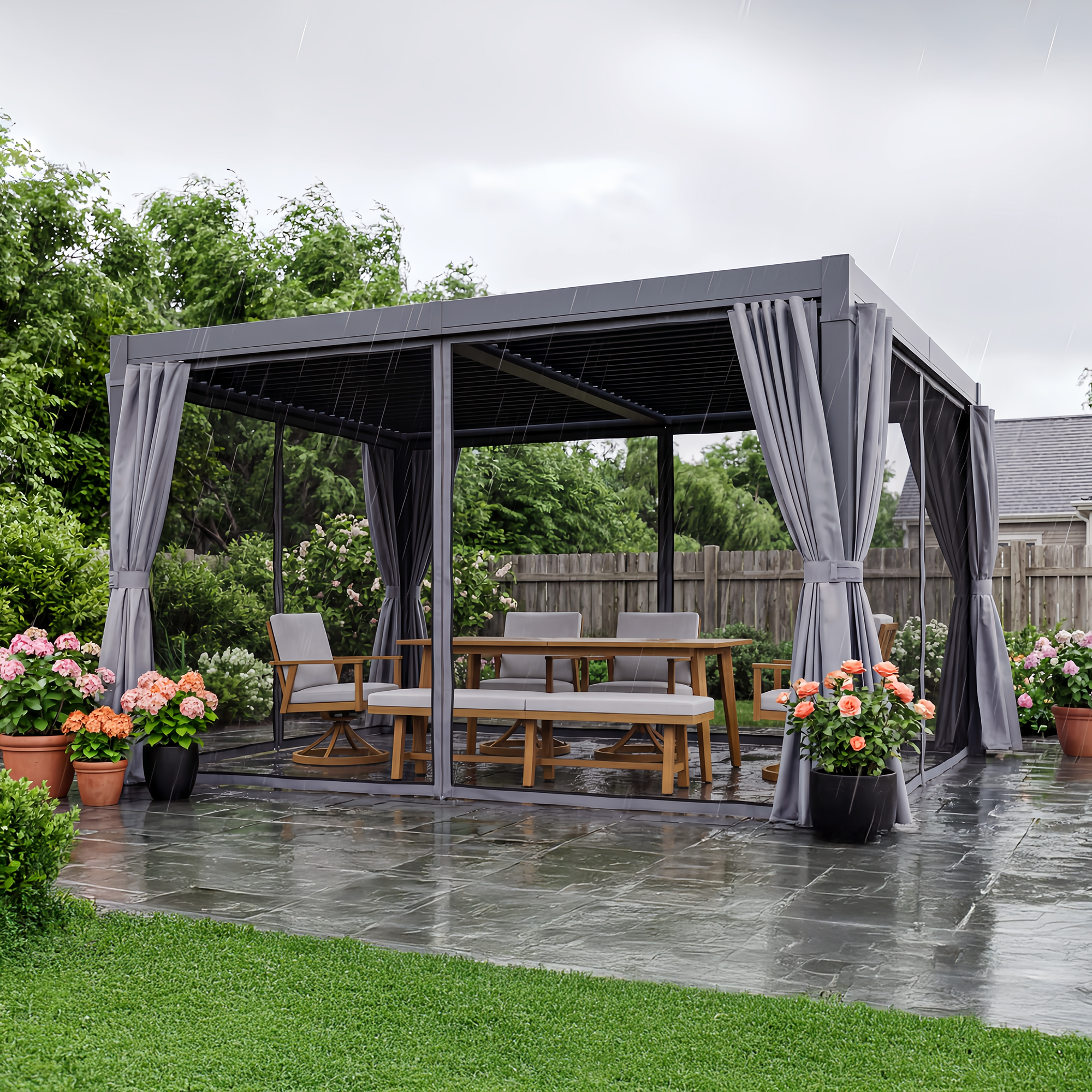
Outdoor living areas often need more control than a fixed roof can provide. An adjustable louvered pergola with curtains combines flexible overhead coverage with adjustable side protection. The adjustable roof helps control sunlight, shade, and airflow according to changing outdoor conditions. Curtains can reduce side exposure while creating greater privacy during daily use. Together, these features support different outdoor conditions without permanently closing the space. Homeowners can adjust the roof during bright weather and use curtains when additional screening becomes necessary. Side curtains also provide another layer of control around seating areas. This combination works particularly well for patios, terraces, balconies, and outdoor dining areas. Proper planning remains important because dimensions, materials, drainage, and control systems affect long-term performance.
How Adjustable Louvers Control Sunlight and Heat
An adjustable louvered roof directly affects the amount of sunlight and airflow reaching an outdoor living area. Open roof positions allow stronger daylight and greater airflow through the covered space. Adjusted positions can reduce direct solar exposure while maintaining an outdoor atmosphere. Closed positions provide greater overhead coverage during stronger sunlight or light rain. Solar position also changes throughout the day, so a fixed roof cannot provide the same level of control. Morning and afternoon sunlight often reach outdoor spaces from different directions. The adjustable roof system allows users to respond to these changing conditions. Motorized systems can simplify frequent adjustments when users change the roof position throughout the day. Manual systems may suit smaller installations where frequent operation is unnecessary. Roof design, panel arrangement, and adjustment range also influence the final shading performance.
How Adjustable Louvered Pergola With Curtains Improves Privacy
Privacy depends heavily on the direction of nearby views. A roof alone cannot prevent people from seeing into a patio from the side. Curtains create a vertical barrier that can reduce direct sightlines from neighboring properties. Their position also affects airflow and the feeling of enclosure. Fully closed curtains provide stronger visual separation around seating or dining areas. Partially opened panels maintain a more open atmosphere while reducing selected viewing angles. Sliding tracks make it easier to adjust individual sides according to daily needs. Fabric density also affects privacy because loosely woven materials allow more silhouettes and light transmission. Darker or heavier fabrics generally create stronger visual separation. However, dense materials may reduce airflow when several panels remain closed simultaneously.
What Materials Affect Pergola Durability?
Material selection affects structural stability, maintenance, and service life. An adjustable louvered pergola with curtains commonly uses aluminum frames because aluminum resists rust and remains relatively lightweight. Proper alloy selection also affects strength, rigidity, and connection performance. Powder-coated surfaces can add another protective layer against outdoor exposure and surface wear. Roof panels require sufficient rigidity because repeated adjustment creates mechanical stress at their connection points. Brackets, bearings, fasteners, and other hardware should match the intended operating load. Corrosion-resistant hardware can reduce problems in humid or coastal environments. Curtain fabric requires equal attention because ultraviolet radiation can gradually weaken unsuitable materials. Solution-dyed acrylic and coated outdoor fabrics can offer stronger resistance to fading and moisture. Drainage components should also resist corrosion because they frequently contact rainwater and accumulated debris.
How Does the Structure Handle Changing Weather?
Outdoor structures face several environmental conditions throughout the year. Direct sunlight can increase surface temperatures and accelerate fabric aging. Rain creates another challenge because water must leave the roof without accumulating around joints. Properly designed roof panels can direct water toward integrated channels and down through designated drainage paths. Wind creates different structural demands because pressure can act against both the roof and curtains. Open curtains usually allow more air movement than fully closed panels. Strong gusts may require users to retract or secure curtains according to manufacturer instructions. Connections between beams, posts, and roof components deserve particular attention during installation. Local climate conditions should influence structural specifications and installation methods. Coastal locations may require additional attention to salt exposure, hardware selection, and surface maintenance.
Which Curtain Features Matter for Daily Use?
Curtain systems should match how frequently the outdoor space changes during normal use. Track-based systems can provide smoother movement across larger openings. Rollers need adequate alignment because uneven tracks can increase resistance during operation. Curtain weight also affects hardware loading and ease of movement. Lighter fabrics may operate more easily but can provide less privacy or wind stability. Heavier fabrics can create stronger screening but require appropriately sized tracks and support points. Users should also consider how panels store when the sides need to remain open.
- Sliding tracks for frequent opening and closing
- Weather-resistant fabrics for exposed outdoor installations
- Secure attachment points for changing wind conditions
- Easy-access panels for cleaning and seasonal maintenance
- Suitable fabric weight for the selected track system
These details influence practical performance more than appearance alone. A well-matched curtain system should move smoothly without excessive force. Storage positions should also prevent fabric from dragging across the floor or collecting moisture. For larger installations, dividing curtains into multiple panels can make operation easier. Users should verify track capacity before selecting heavy outdoor fabrics. Proper installation keeps rollers aligned and reduces unnecessary mechanical resistance. Regular cleaning also helps preserve fabric appearance and operating performance.
How Should You Plan Pergola Size and Layout?
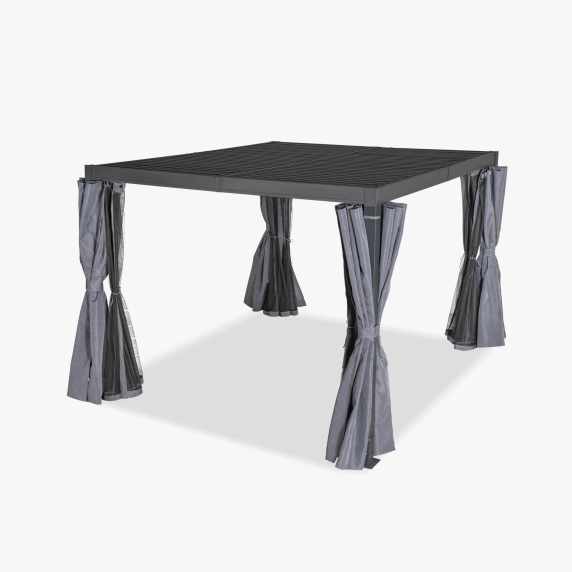
An adjustable louvered pergola with curtains requires careful layout planning before installation. Accurate measurements should come before selecting the final pergola dimensions. Start by measuring the available width, depth, and usable ceiling height. Next, mark existing walls, doors, windows, drainage points, and permanent structures. Furniture dimensions also matter because tables and chairs need adequate circulation space. Walking paths should remain clear when curtains are fully extended. Door swings require additional clearance near posts and side panels. Ceiling height affects visual proportion and determines how comfortably people can use the covered area. Wall-mounted installations may require stronger attachment points than freestanding structures. Ground conditions can also affect post placement and foundation requirements. Careful layout planning prevents conflicts between the pergola structure and existing outdoor features.
What Are the Differences Between Open and Enclosed Designs?
An open louver system emphasizes airflow, daylight, and visual connection with the surrounding environment. Adding curtains introduces greater control over side exposure without creating a permanent wall. Fully open curtains preserve a spacious appearance during pleasant weather. Closed panels provide more privacy when neighboring buildings overlook the patio. Roof adjustment adds another layer because users can control overhead exposure separately from the sides. This separation creates more configuration options than a fixed enclosure. For example, users can close the roof while leaving curtains open during mild rain. Another arrangement can keep the roof more open while closing one curtain panel against low-angle sunlight. Such flexibility helps outdoor spaces adapt to changing conditions. The appropriate configuration depends on climate, orientation, privacy requirements, and intended activities.
How Do Motorized Louver Systems Improve Convenience?
Motorized systems reduce the physical effort required to change roof positions. An electric motor adjusts the roof system through an integrated mechanical mechanism. Connected components transfer movement across the adjustable roof structure. Remote controls or wall switches can activate these components from convenient locations. Some systems can also connect with sensors or broader home automation controls. Electrical connections require suitable protection against moisture and physical damage. Motors should match the roof dimensions, panel weight, and mechanical resistance. Excessive load can increase wear across gears and connection points. Unusual sounds, incomplete movement, or jerky operation can indicate mechanical problems. Prompt inspection can prevent minor mechanical issues from developing into larger system failures.
What Maintenance Does the Pergola Require?
Regular maintenance helps preserve movement, drainage, surfaces, and curtain performance. Dust and leaves can accumulate inside roof channels and restrict water flow. Dirt around moving components can also increase resistance during repeated operation. Curtains need cleaning according to their fabric composition and coating requirements. Harsh chemicals may damage protective finishes or weaken outdoor textiles. Mechanical connections should receive periodic inspection for looseness, corrosion, or abnormal wear. Motorized systems require additional checks around electrical connections and drive components. The following table summarizes common maintenance areas and practical inspection priorities.
| Component | Maintenance Focus | Typical Attention |
|---|---|---|
| Roof Panels | Remove dirt and inspect movement | Regularly |
| Drainage Channels | Clear leaves and accumulated debris | Before wet seasons |
| Frame and Fasteners | Check joints, corrosion, and looseness | Periodically |
| Curtains | Clean fabric and inspect attachment points | As needed |
| Motor System | Check movement, noise, and connections | Periodically |
Maintenance frequency should reflect local weather and actual usage. Coastal environments may require more frequent surface and hardware inspections. Areas with heavy rainfall need closer attention to drainage channels. Frequent motor operation can also increase the need for mechanical inspection. Curtain fabrics should dry properly after cleaning or prolonged moisture exposure. Users should avoid forcing components when movement becomes difficult. Professional servicing may become necessary when mechanical or electrical faults persist. Consistent maintenance protects both daily usability and the condition of the outdoor structure.
How Does an Adjustable Louvered Pergola With Curtains Compare?
Combining adjustable roof coverage with curtains creates separate controls for overhead and side exposure. Fixed pergolas generally provide consistent shade but cannot respond to changing sunlight conditions. Retractable fabric roofs can offer flexibility but use different mechanisms and maintenance requirements. Open pergolas provide greater airflow but offer less protection from direct weather conditions. Adding curtains addresses side exposure while keeping the roof adjustable. This combination can support several activities within the same outdoor area. Dining spaces may benefit from stronger glare control during bright afternoon periods. Seating areas may prioritize privacy when nearby homes face the patio. Outdoor kitchens may require airflow while still benefiting from overhead shade. The practical value depends on how these controls match the property's orientation and daily use.
What Should You Check Before Choosing a Pergola?
Several technical factors should be reviewed before purchasing or specifying an outdoor pergola system. First, confirm the available installation dimensions and required clearance around every side. Next, examine the frame material, surface finish, roof construction, and hardware specifications. An adjustable louvered pergola with curtains also requires careful attention to drainage design, because poor water management can affect surrounding surfaces and structural components. Curtain fabric should match expected ultraviolet exposure, moisture levels, and cleaning requirements. Motorized models require suitable power connections and accessible control components. Wind conditions should also influence structural specifications and curtain operation. Installation quality matters because inaccurate alignment can affect moving parts and drainage performance. Finally, consider maintenance access before finalizing the layout. These checks help create an outdoor structure that fits the site's physical conditions and expected use.
FAQ
How Do Adjustable Louvers Work?
Adjustable roof panels move through an integrated support and control system. A manual mechanism or motorized system changes their position. Open positions allow more sunlight and airflow to enter the space. Adjusted positions reduce direct sunlight while maintaining an outdoor atmosphere. Closed positions provide greater overhead coverage during stronger sunlight or light rain. The exact movement range depends on the roof design and mechanical system. Proper alignment keeps the panels moving smoothly across the structure. Users should avoid forcing panels when resistance occurs during operation. Regular inspection of connected hardware can help maintain reliable movement. Motorized models also require suitable electrical protection in outdoor environments.
Can Pergola Curtains Stay Outside Year-Round?
Outdoor curtains can remain installed year-round when their fabric and hardware suit local conditions. UV exposure gradually affects unsuitable fabrics through fading and fiber degradation. Moisture can create additional problems when fabric remains wet without adequate ventilation. Water-resistant materials can improve performance, but they do not eliminate maintenance requirements. Strong wind also places additional loads on tracks, rollers, and attachment points. Some installations may require curtains to remain open during severe weather. Seasonal storage can extend fabric life when harsh conditions are expected. Cleaning should follow the fabric manufacturer's care requirements. Users should also inspect seams, hems, tracks, and fasteners regularly. Proper storage and maintenance can help preserve appearance and mechanical performance.
Does a Louvered Pergola Need Regular Maintenance?
Regular maintenance keeps the structure, moving components, drainage paths, and curtains functioning properly. Roof panels should remain free from leaves, dirt, and other debris. Drainage channels need periodic cleaning because blockages can redirect water toward unwanted areas. Mechanical joints should receive visual inspections for looseness, corrosion, or unusual wear. Motorized systems require additional attention to electrical connections and drive components. Curtain tracks should remain clean so rollers can move without unnecessary resistance. Fabric should receive suitable cleaning based on its material and protective treatment. Local weather conditions may increase maintenance frequency in coastal or high-rainfall areas. Prompt attention to abnormal sounds or movement can prevent larger mechanical problems. Professional inspection may be appropriate when structural or electrical issues require specialized service.